
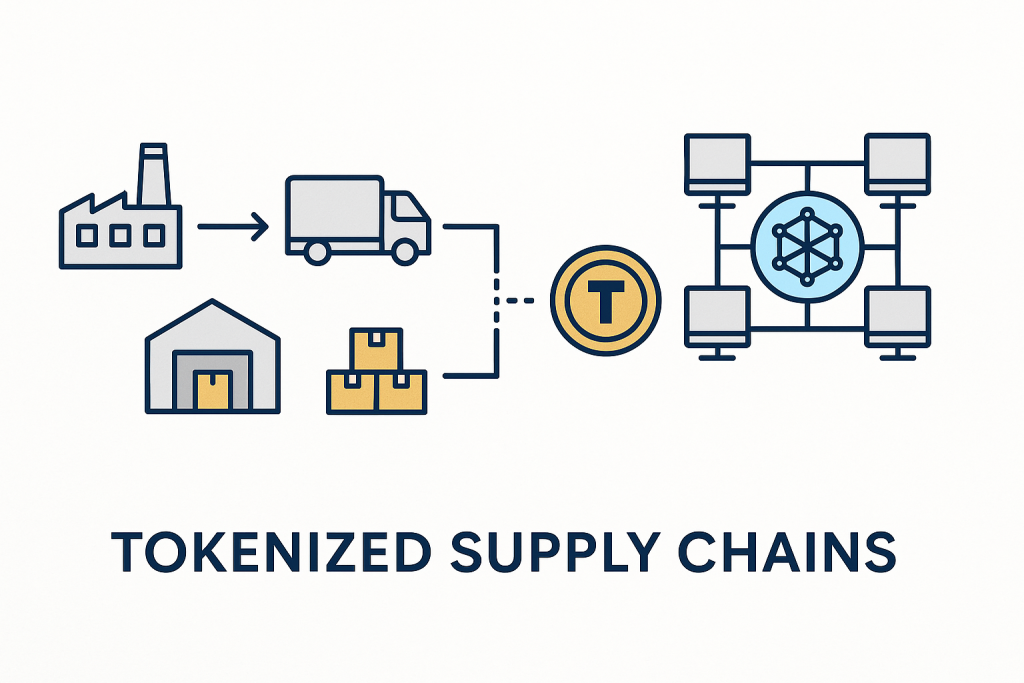
Tokenized supply chains turn a product’s journey—where it came from, how it moved, who handled it, and what conditions it experienced—into a verified digital asset. Blockchain adds a shared, tamper-resistant layer that multiple organizations can trust without relying on one central database. The important shift isn’t just provenance. It’s that logistics, warranty, and carbon data can become interoperable, auditable, and potentially tradable—like “data with receipts.” This makes supply chains less like hidden pipelines and more like transparent, programmable networks.
Why This Matters
Supply chains sound industrial, but they shape daily life: food safety, product authenticity, delivery reliability, and the true environmental footprint of what families buy. Tokenization changes how these realities are managed.
It improves trust in what we consume.
Parents and educators are increasingly teaching kids to ask: “Where did this come from?” A tokenized chain makes answers verifiable. Whether it’s a medicine batch, school lunch produce, or a toy with safety certifications, proof can follow the product—without depending on marketing claims.
It reduces friction between organizations.
Today, supply chain data often sits in siloed systems. Each handoff requires reconciliation, emails, PDFs, and repeated audits. Tokenized records let partners share a single version of truth. That can cut disputes, accelerate recalls, and shorten settlement cycles.
It enables new kinds of value, not just visibility.
Once logistics and compliance data are standardized and trusted, they can be reused. Verified cold-chain performance can support insurance pricing. Warranty history can support second-hand markets. Clean carbon records can support sustainability financing. In other words, the data itself becomes an asset.
It creates a real-world learning window for students.
Supply chains are a practical way to teach systems thinking, data literacy, and ethics. Tokenization adds a concrete layer: students can see how trust is engineered through records, standards, and governance—not just assumed.
Here’s How We Think Through This (steps, grounded)
Step 1: Define the product journey we actually need to trust.
We start by mapping critical events and risks.
Examples:
- food: farm origin, temperature exposure, contamination points
- electronics: component authenticity, repair history, warranty eligibility
- fashion: labor certification, material sourcing, recycling pathway
Not everything needs to be tokenized; only what creates meaningful trust or efficiency.
Step 2: Identify which data must be “hard proof” versus “soft context.”
Some data should be immutable (batch IDs, custody transfers, inspections).
Other data can be updateable (estimated arrival times, routing adjustments).
We separate these early so blockchain is used where permanence matters.
Step 3: Design a credible bridge from physical to digital.
Blockchain can secure data, but it can’t sense reality by itself.
We ask: how does the real world get verified?
Options include:
- IoT sensors for temperature, humidity, shock
- certified inspections at key points
- regulated registries for origin or safety compliance
The credibility of tokenized supply chains is only as strong as this bridge.
Step 4: Establish interoperable standards before scaling.
Tokenization fails when every company creates its own format.
We focus on shared schemas for:
- event types (handoff, inspection, transformation)
- identifiers (products, batches, containers)
- measurement definitions (carbon, temperature ranges, warranty states)
Interoperability turns a trace into a network.
Step 5: Treat custody changes like financial settlement.
A tokenized supply chain is essentially a custody ledger.
We model transfer rules:
- who can update states
- what triggers a new custody record
- what happens if connectivity fails
This is where coordination gains appear.
Step 6: Build governance for disputes and exceptions.
Real supply chains are messy. We design for:
- partial shipments
- damaged goods
- sensor errors
- contested handoffs
Blockchain doesn’t remove disputes; it makes the resolution path explicit.
Step 7: Look for new value layers beyond provenance.
Once traceability works, we explore secondary markets for verified data:
- verified logistics performance for insurers, lenders, and buyers
- warranty and repair history for resale and circular economies
- carbon and compliance data for sustainability reporting and credits
This is where tokenized supply chains become infrastructure for new markets.
What is Often Seen as a Future Trend — Real-World Insight
Supply chain tokenization is often framed as “blockchain for tracking stuff.” In practice, the deeper change is that supply chain data becomes portable trust.
What we’re seeing in real deployments:
Provenance is just the entry point.
Early wins come from authenticity and recall readiness, but the long-term value is data reuse. When multiple parties trust the same records, they stop duplicating audits and start building services on top of the shared truth.
The biggest obstacle is not technology; it’s alignment.
Companies worry about exposing competitive information. The solution is selective disclosure: proving claims (e.g., ethical sourcing, carbon thresholds, cold-chain compliance) without revealing full operational details. Tokenization makes this feasible at scale.
Verified carbon data is becoming a commercial asset.
As regulation tightens and consumers demand proof, carbon accounting is shifting from spreadsheets to auditable flows. Tokenized events can attach emissions estimates to real custody changes. That makes sustainability reporting more defensible—and enables new finance models tied to verified impact.
Warranty and lifecycle data are quietly reshaping markets.
For electronics, appliances, and vehicles, tokenized lifecycle records make repairs and second-hand sales safer. A buyer doesn’t need to “trust the seller.” They can verify the product’s history directly.
The takeaway: tokenized supply chains are less about watching products move and more about turning movement into trustworthy, interoperable data that can support new economic and civic uses.