
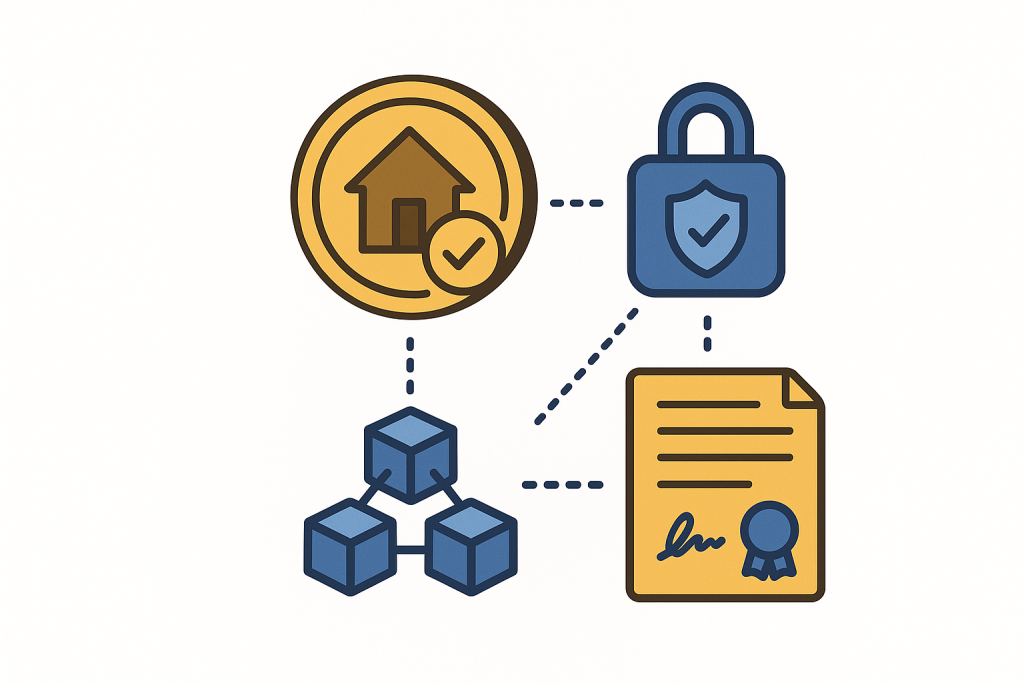
Digital twins are becoming the backbone of how physical things enter digital systems. But there’s a critical distinction: a token that references an asset is not the same as a token that carries enforceable rights to that asset. The future of tokenized real-world assets depends less on blockchain speed and more on legal-grade linkage—registries, custody, audit trails, and clear rights mapping. In short: the bottleneck is not digitizing objects. It’s digitizing ownership in a way courts, regulators, insurers, and everyday people can rely on.
Why This Matters
For parents, educators, and future-curious readers, tokenized assets may sound like a niche finance idea. But the underlying question is much bigger and very human: When the physical world becomes digitally tradable, how do we keep ownership trustworthy?
Here’s why the rights layer matters:
Trust in ownership shapes real life outcomes.
Whether it’s a family home, a car, farmland, or a local business asset, ownership is what allows people to borrow, insure, sell, inherit, or share resources. If token systems can’t reliably prove rights in the real world, they won’t become a safe foundation for social and economic life.
Without enforceable linkage, tokens create false confidence.
A “token that points to a house” may look official in a wallet, but if the land registry doesn’t recognize that token as a valid claim, the token holder has no real protection. This gap can lead to disputes, fraud, and lost value—especially for non-experts.
Education needs to shift from “What is blockchain?” to “What is a digital right?”
Students will grow up in a world where digital systems mediate physical value. The literacy challenge is not just technical. It’s civic: understanding how rights are created, validated, transferred, and governed across digital and legal systems.
This is how future markets will be built.
Tokenization only scales when legal rights can move as smoothly as digital tokens do. If the rights cannot travel with the token, markets stay fragmented and risky.
Here’s How We Think Through This (steps, grounded)
Step 1: Separate “representation” from “claim.”
We start by asking:
- Is the token merely a label or pointer to an asset?
- Or is it a legally enforceable claim to ownership, usage, or revenue?
Most early experiments stopped at representation. The future depends on claims.
Step 2: Map the rights bundle precisely.
“Ownership” is not one right. It’s a bundle. We define what the token actually grants:
- title ownership
- usage rights
- revenue share
- voting or governance rights
- lien or collateral rights
A token only has meaning if these rights are explicit and defensible.
Step 3: Identify the authoritative registry.
Every asset class has a “source of truth.”
- real estate has land/title registries
- vehicles have transport registries
- securities have regulated issuers and transfer agents
- commodities have warehouse receipts and inspection systems
We check whether the token is recognized by, integrated with, or anchored to that registry. If not, rights linkage is weak.
Step 4: Design custody and control.
Who holds the asset while tokens circulate?
Custody models vary by asset:
- regulated custodians (banks, trust companies)
- special purpose vehicles (SPVs)
- escrow or controlled accounts
- verified owners holding directly
Good custody design ensures that selling or splitting tokens doesn’t create hidden conflicts over who truly controls the physical asset.
Step 5: Build an audit trail that bridges worlds.
Blockchain provides an on-chain history. But legal enforceability needs off-chain proof too:
- valuation reports
- inspection certificates
- maintenance logs
- compliance documents
- identity checks for owners and transferees
The audit trail is the credibility layer. It’s what makes token claims hold up outside crypto-native environments.
Step 6: Stress-test dispute resolution.
We ask uncomfortable but necessary questions:
- What happens if the physical asset is damaged or seized?
- If a co-owner disagrees, what governs the outcome?
- If a token is stolen, can rights be recovered?
- Which jurisdiction applies?
Systems that don’t model disputes in advance will fail when real-world complexity shows up.
Step 7: Treat rights linkage as the product.
Blockchain is the rail. Rights linkage is the deliverable.
We measure success by legal clarity, operational enforceability, and user safety—not by token volume or hype cycles.
What is Often Seen as a Future Trend — Real-World Insight
Tokenization is often framed as a futuristic market trend, but in practice it’s an institutional upgrade. The biggest advances today are happening in the “boring” layers that most headlines ignore.
What we’re seeing:
Rights linkage is where time and money are actually going.
Projects that are serious about real-world assets spend most of their effort on registry integration, legal structuring, custody, audits, and compliance. The blockchain piece is often the easiest part. The difficult part is encoding reality into lawful, traceable rights.
Most tokens today are still “digital mirrors,” not legal claims.
Many offerings remain in the “pointer phase”: a token representing ownership in spirit but not in law. This is why some pilots don’t scale. Until the legal claim travels with the token, adoption stays limited to insiders who understand the risks.
Hybrid models are emerging as the practical path.
Instead of replacing registries, near-term systems tend to wrap around them:
- registries confirm status
- custodians safeguard assets
- blockchain automates transfer and governance
This pragmatic layering is how infrastructure actually evolves.
Expect future careers that combine tech, law, and governance.
The talent gap isn’t only blockchain engineers. It’s people who can design systems where digital rights align with human institutions. For educators and parents, this is a useful future signal: interdisciplinary literacy will matter more than narrow technical mastery.
The takeaway: tokenized assets won’t become mainstream through bigger markets alone. They’ll become mainstream when digital twins carry legal-grade rights that society can enforce with confidence.