
Quick Insight
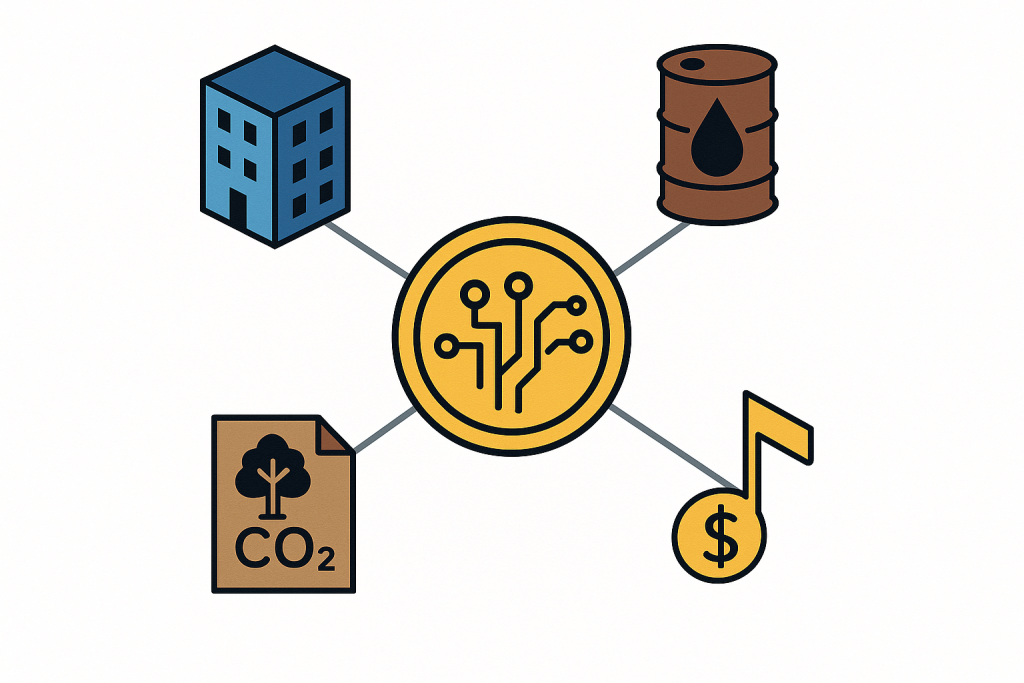
Tokenization is turning real-world assets into “digital twins” that can be owned, traded, and managed on blockchain rails. What started with finance is expanding to real estate, commodities, carbon credits, intellectual property, and supply-chain items. As this spreads, regulators are being forced to modernize the basic plumbing of markets: how assets are registered, how ownership is reported, and how fraud is prevented.
The future isn’t “everything goes on chain tomorrow.” It’s that the legal and compliance systems around assets will be rebuilt so digital twins can be trusted as much as paper titles and legacy registries.
Why This Matters
Tokenization is not just a new technical format. It changes the rules of trust.
For builders and platforms
When you tokenize a real asset, you are entering a regulated world whether you intend to or not. The hard part isn’t minting tokens; it’s proving that the token truly represents the underlying asset, that ownership transitions are valid, and that users aren’t being misled. Platforms will increasingly be treated like market infrastructure—expected to maintain accurate records, prevent manipulation, and provide reliable disclosure.
For investors and institutions
Tokenized assets promise liquidity and access—fractional ownership, faster settlement, global distribution. But the investment risk shifts toward verification risk:
- Does the token map cleanly to a legally recognized claim?
- Can ownership be enforced off-chain?
- Is there a reliable audit trail?
The more credible the regulatory wrapper and registry integration, the more investable the token becomes.
For parents and educators
Tokenization will show up in everyday life in subtle ways: ownership of digital collectibles tied to real items, token-based proof of skills or creativity, community carbon projects, or student participation in simulated markets. The important literacy is not “how blockchain works,” but “how digital ownership is verified and protected.”
If digital twins become common, people need to know what rights they truly carry.
Here’s How We Think Through This (steps, grounded)
Step 1: Start with the “asset truth” problem.
A digital twin only matters if the real asset is verifiable. Tokenization forces a sharper question:
- Who confirms the asset exists?
- Who confirms it’s not pledged twice?
- Who confirms its condition, boundaries, or supply?
Expect regulators to require stronger “source-of-truth” links to licensed appraisers, custodians, registries, or certified auditors.
Step 2: Map the legal claim the token represents.
A token can represent different things:
- A direct ownership interest (title or share).
- A contractual right (revenue share, usage right, royalty).
- A certificate of authenticity or provenance.
Different claims trigger different rules. This is where teams often stumble—building a token that looks like ownership but is legally only a promise.
Step 3: Expect registries to become hybrid.
Most real-asset markets rely on registries: land records, commodity warehouses, IP offices, carbon registries, shipping manifests.
Regulators are moving toward hybrid systems where:
- The legacy registry remains the legal anchor.
- The blockchain twin becomes the transactional layer.
Your token’s credibility will depend on how well these layers talk to each other.
Step 4: Build reporting as an always-on feature.
Tokenized markets produce continuous data: transfers, holdings, collateralization, fractionalization. Regulators will modernize reporting to match this reality.
Platforms should plan for:
- Real-time or near-real-time ownership reporting.
- Standardized disclosures embedded in token metadata.
- Automated alerts for concentration risk, wash trading, or suspicious flows.
This is less about bureaucracy and more about making digital markets legible.
Step 5: Treat anti-fraud frameworks as token-native.
Old fraud models assumed slow markets and paper trails. Tokenization creates new fraud vectors:
- Fake or duplicated asset backing.
- Manipulated provenance histories.
- Fractional schemes that obscure real risk.
Expect rules that require proof of reserves, third-party attestations, and auditability by default, especially for high-value or retail-facing assets.
Step 6: Design for cross-border interpretation.
Assets are local; tokens are global. That tension forces regulators to clarify:
- What law governs ownership when tokens trade globally?
- How disputes handle residency, custody, or tax jurisdiction?
Projects that anticipate multi-jurisdiction compliance early will scale faster than those that retrofit later.
What is Often Seen as a future trend: real-world insight
Trend people talk about: “Tokenization will make all assets liquid and instantly tradeable.”
What we actually see: Tokenization increases technical liquidity, but legal liquidity depends on regulation catching up.
Real-world assets have messy realities: titles can be uncertain, commodities require custody, carbon credits need verified issuance and retirement, IP rights change by territory, and supply-chain items rotate through many hands. Regulators know this. Their response won’t be to stop tokenization, but to enforce more rigorous standards around it.
Three likely outcomes as rules mature:
- Digital twins will be allowed—only with strong verification rails.
Issuers will need certified proofs linking tokens to real assets, not just marketing claims. - Regulators will standardize the “token lifecycle.”
Expect formal rules for issuance, transfer, updating asset state, and retirement/burn—mirroring how real assets behave. - Market trust will concentrate around compliant platforms.
Just like banking, the most trusted systems will attract the most flow. Smaller or informal token markets won’t vanish, but they’ll be boxed into narrower use cases.
The deeper insight: tokenization is pushing regulators to modernize the meaning of ownership in a digital world. By 2030, the most valuable digital twins won’t be the flashiest ones. They’ll be the ones that can prove—clearly, legally, and repeatedly—that they are faithful mirrors of reality.