
Quick Insight
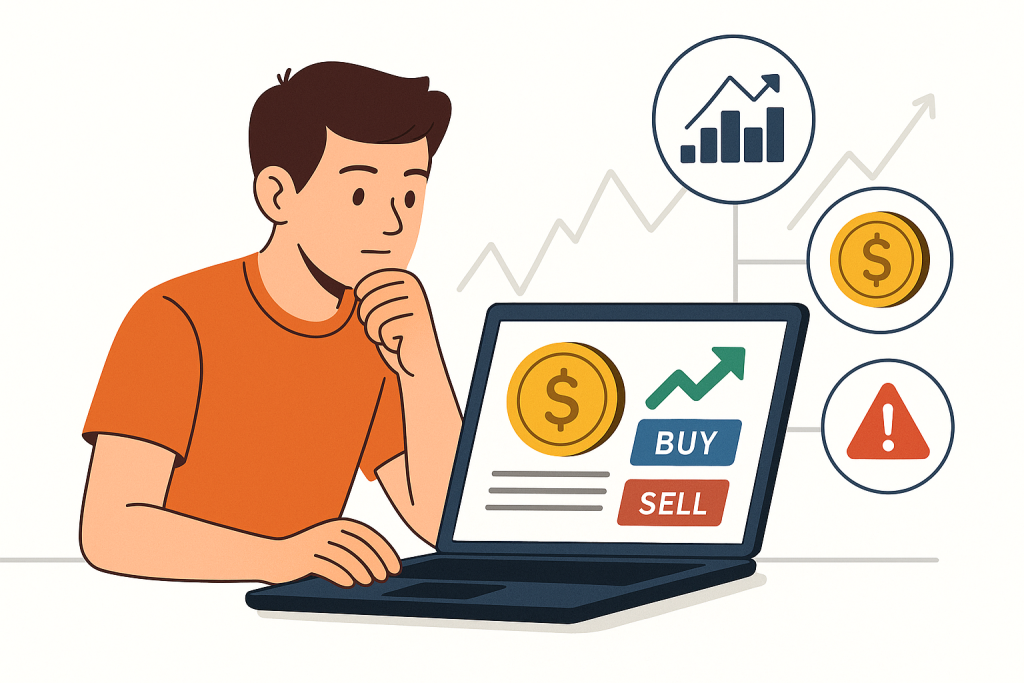
Digital marketplaces—where tokens, points, items, and assets are exchanged—are shaping how young people think about value and opportunity. Understanding liquidity, market dynamics, and behavioral traps helps learners recognize not only how these systems function, but how to engage with them responsibly.
Why This Matters
Students already interact with digital marketplaces, often without the financial literacy needed to navigate them safely.
From in-game item markets to creator-platform exchanges to early experiments with tokenized assets, young people learn how markets feel before they learn how markets work. These environments can be fast-moving, emotionally charged, and heavily influenced by design choices that amplify urgency or competition.
Without guidance, students may:
- Treat digital assets as risk-free
- Overestimate liquidity (“I can sell this anytime”)
- Follow hype rather than fundamentals
- Miss warning signs of manipulation or scams
By teaching the marketplace mindset, educators and parents help young learners understand digital trading as a skillset—not a guessing game.
Here’s How We Think Through This
Grounded steps for introducing marketplace literacy in a clear and practical way.
1. Start with how digital marketplaces are organized
Most digital exchanges share core components:
- Listings: items, tokens, or assets available for trade
- Buy and sell mechanisms: fixed price, auction, or bid/ask
- Market history: previous prices, volumes, trends
- Rules and fees: what the platform controls and what users pay
Understanding structure reduces the mystery and helps learners identify legitimate platforms.
2. Explain liquidity as the foundation of a healthy market
Liquidity affects everything:
- How easily an asset can be sold
- How stable its price is
- Whether a marketplace feels “active” or stagnant
A simple rule for students:
If very few people trade it, it will be difficult to sell—no matter what the price chart shows.
3. Teach how supply and demand drive value
Tokens, items, and digital assets are influenced by:
- Scarcity
- Utility
- Community interest
- Platform rules
Young learners benefit from seeing how these variables change, and how quickly digital environments can shift.
4. Introduce common patterns of unhealthy trading behavior
Many digital platforms are designed to stimulate action, not reflection.
Examples include:
- Chasing rapid price swings
- Buying because others are buying
- Selling out of fear
- Believing “limited time” messaging without analysis
- Overcommitting to a single asset type
Helping students identify these patterns early builds emotional resilience.
5. Highlight the anatomy of a scam or manipulative environment
Red flags include:
- Guaranteed returns
- Lack of transparency
- Anonymous, unverified creators
- Extremely high rewards for early participants
- Market behavior that moves too quickly to be organic
- Pressure to recruit others
These indicators empower students to pause and evaluate instead of reacting impulsively.
6. Provide safe, guided simulations
Educators can build classroom marketplaces where students:
- Trade classroom tokens or items
- Observe price formation
- See liquidity bottlenecks
- Identify hype patterns
- Reflect on their own decisions
Simulated environments offer all the lessons with none of the financial risk.
What Is Often Seen as a Future Trend — Real-World Insight
Many adults assume digital marketplaces are niche or advanced, but for today’s students, they’re part of everyday life. From trading digital cards to buying game skins to navigating creator-platform rewards, young people are effectively acting as market participants long before they step into traditional economic systems.
The real insight is that these marketplaces don’t just teach economics—they shape behavior. Students learn:
- How it feels to gain or lose value
- How scarcity affects desire
- How community sentiment moves markets
- How transparency (or lack of it) influences trust
By reframing digital trading as a skill that requires reflection, not reaction, we help learners develop a marketplace mindset grounded in awareness, curiosity, and caution. This prepares them for an increasingly digital economy where marketplaces will be both more accessible and more complex than ever before.