
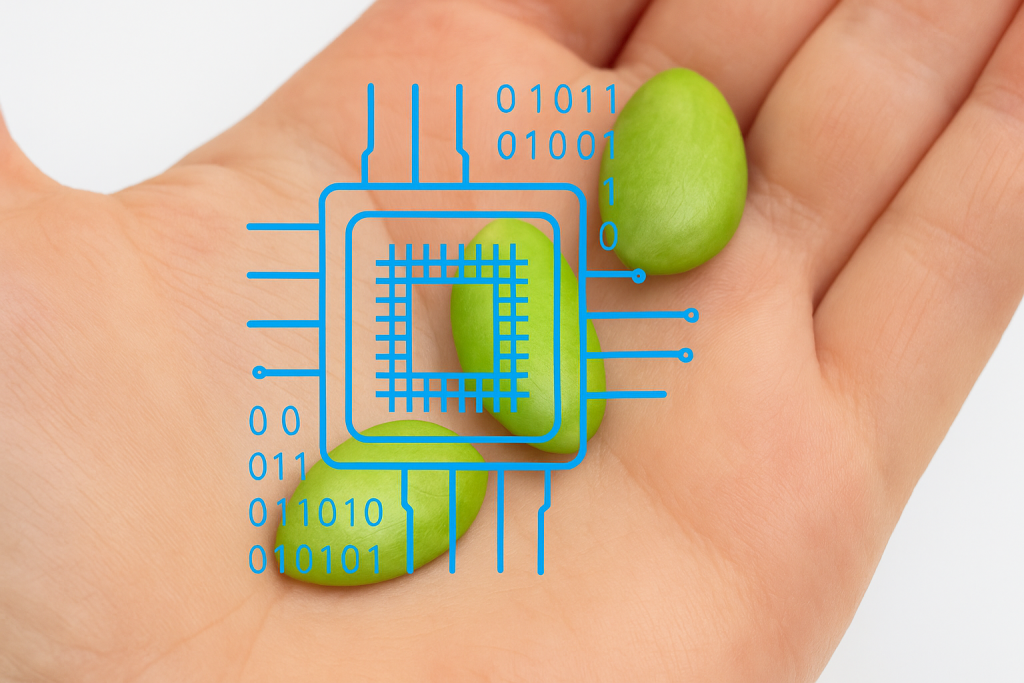
Tomorrow’s agriculture won’t rely on climate luck—it will depend on coded resilience.
What Are Synthetic Seeds?
Synthetic seeds are engineered plant embryos encapsulated in a protective coating that can be stored, shipped, and germinated like conventional seeds—but with programmable traits. These seeds combine biological material with digital precision, using gene editing and data-driven modeling to create crops that can thrive in extreme environments.
The concept isn’t just about preserving biodiversity; it’s about ensuring agriculture can adapt to a rapidly changing planet.
The 2050 Challenge
By 2050, the global population is projected to exceed 9.7 billion. At the same time, farmland will continue to shrink due to urbanization, salinity, and drought. Traditional seed varieties—bred over centuries for stable climates—are increasingly misaligned with the volatility of modern weather patterns.
Synthetic seeds offer a scalable solution: genetic resilience built at the code level.
The Technology Behind the Seeds
Biotech companies are now merging genomics, data modeling, and predictive agriculture to create programmable seed architectures. The process often involves three key layers:
- Genomic Mapping: Scientists identify genetic markers that influence traits such as drought tolerance, heat resistance, or accelerated growth cycles.
- Algorithmic Design: AI models simulate how these genes will behave under varying climate conditions, optimizing combinations for resilience and yield.
- Biofabrication: Using CRISPR and synthetic biology, desired traits are encoded into seed embryos, which are then preserved within biopolymer capsules for longevity and transport.
This system transforms seeds into data objects—each one carrying both biological potential and predictive intelligence.
From Storage to Simulation: The Synthetic Seed Bank
Traditional seed banks, like those in Norway’s Svalbard or India’s National Gene Bank, preserve genetic diversity by freezing real seeds. Synthetic seed banks take the concept further.
Instead of preserving what was, they store what could be.
Digital twins of each seed are maintained in data repositories, allowing scientists to model their performance before physical planting. Climate simulations can predict which synthetic seed varieties will perform best in future temperature or rainfall scenarios.
The result: agriculture that’s anticipatory, not reactive.
Resilience by Design
Synthetic seeds are being designed to survive:
- Droughts and Floods: By adjusting genetic expression for water retention or root depth.
- Temperature Swings: Through proteins that stabilize cell structures in heat and cold.
- Poor Soils: Via microbes engineered to enhance nutrient uptake or nitrogen fixation.
These advances could enable farming in regions previously considered unviable—transforming deserts, rooftops, or even Martian colonies into potential agricultural zones.
Ethics and Ownership
The technology raises critical ethical questions. Who owns a “designed” plant? If seeds become patented software, will small farmers lose autonomy?
Many researchers advocate for open-source biotechnology frameworks, allowing equitable access to synthetic seed designs. Others push for government regulation to ensure transparency and genetic traceability across borders.
What This Means for Classrooms and Communities
For educators and parents, synthetic seeds provide a powerful teaching lens on the future of sustainability. Students can learn how biology, coding, and environmental science intersect—illustrating how digital thinking is reshaping natural systems.
Imagine a classroom simulation where students model how different genetic traits affect crop performance in varying climates—a real-world exercise in data literacy and ethics.
The Future Seed Economy
By 2050, seed value may no longer be defined by species or origin, but by algorithmic adaptability. Farmers could select seeds from a digital catalog based on forecast data, licensing crop genomes the way software users purchase digital tools.
The transition from natural selection to designed resilience represents one of the most profound shifts in human agriculture since domestication began.
Final Thought
Synthetic seeds embody both promise and paradox. They can secure food systems against climate collapse—but they also demand a new level of responsibility in how we design, distribute, and define life itself.
The real challenge of 2050 isn’t growing food—it’s learning to grow wisely in a world we’re rewriting from the cell up.