Quick Insight
Music streaming transformed how we listen—but not how artists earn. Despite billions of streams, most musicians still see little return due to opaque payout structures and centralized platforms that capture most of the value.
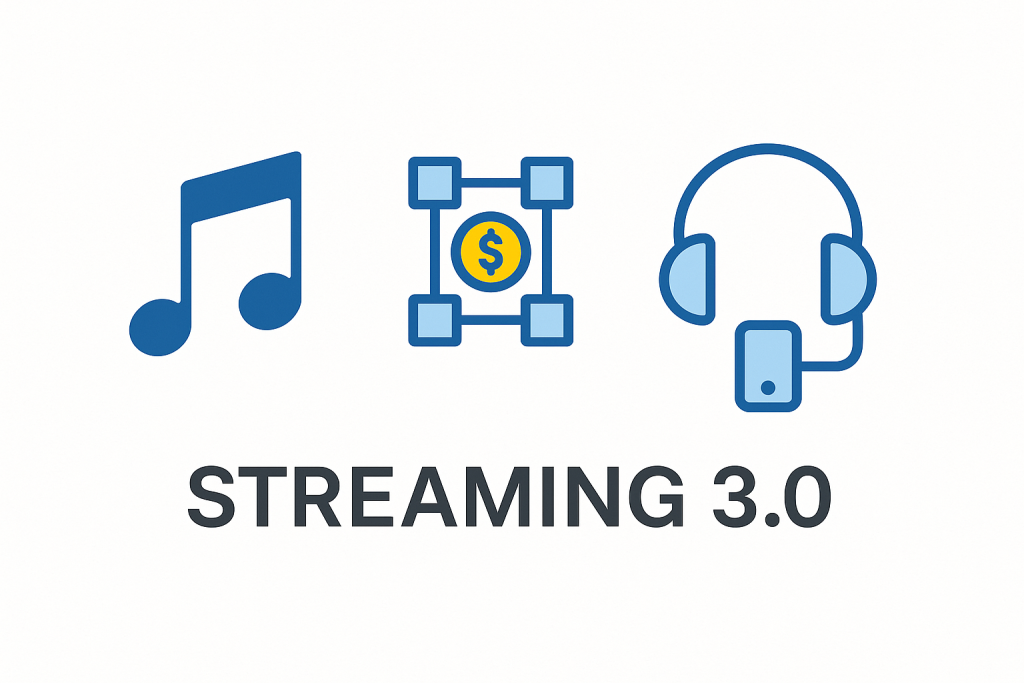
Now, a new model is emerging: Streaming 3.0, built on Web3 principles. Using blockchain and smart contracts, decentralized streaming platforms can distribute earnings instantly, transparently, and equitably—reshaping the relationship between artists, listeners, and platforms.
Why This Matters
The traditional streaming economy works, but not for everyone. Major platforms operate on a “pooled revenue” model—subscription fees are collected and redistributed through algorithms that favor major labels and high-traffic artists. Independent creators, who make up the vast majority of today’s music ecosystem, often receive pennies per thousand streams.
Web3 introduces a fundamentally different structure:
- Direct artist-to-fan transactions. Listeners pay artists directly via crypto or platform tokens.
- Smart contract automation. Royalties are split instantly among songwriters, producers, and performers, with no intermediaries.
- Transparent, auditable ledgers. Every transaction is visible and verifiable, reducing disputes and delays.
This shift doesn’t just change how artists are paid—it redefines who holds the power in music’s digital economy.
Here’s How We Think Through This
(A grounded framework for understanding Streaming 3.0)
- Map the value chain.
Traditional streaming routes money from listener → platform → label → artist. In a Web3 model, that path becomes listener → blockchain → artist. Each smart contract defines and enforces revenue distribution, eliminating administrative bottlenecks. - Identify use cases with real traction.
Decentralized platforms like Audius, Opulous, and Royal are already operational. They allow artists to tokenize their music rights, enabling fans to purchase fractional ownership in songs and share in streaming revenue. This creates a participatory economy rather than a passive one. - Balance decentralization with usability.
While the technology is powerful, user experience still determines adoption. Web3 platforms must feel as seamless as Spotify or Apple Music—simple wallets, intuitive interfaces, and reliable playback—if they’re to succeed beyond early adopters. - Integrate education and empowerment.
For parents and educators, Streaming 3.0 isn’t just about music—it’s about teaching digital literacy. Understanding how value flows through decentralized systems prepares young creators for a future where they can own and monetize their intellectual property directly. - Monitor emerging governance models.
Some platforms allow artists and fans to participate in governance through tokens—deciding payout structures or platform features democratically. This participatory governance could become the blueprint for creator-led digital economies.
What Is Often Seen as a “Future Trend” (and the Real-World Insight)
Many see decentralized streaming as a distant dream, but the groundwork is already being laid. Several independent artists are earning real income from Web3 platforms, and some are using NFTs or fan tokens to build communities that fund entire albums before release.
The real-world insight: Streaming 3.0 is not about replacing Spotify overnight—it’s about rebalancing the economics of attention. The next generation of artists will not just publish their music; they’ll code their rights, track their royalties, and build direct digital economies with their audiences. For educators and parents guiding digital natives, this represents a crucial shift: creativity and technology are no longer separate paths—they’re converging into new systems of ownership, identity, and value.