
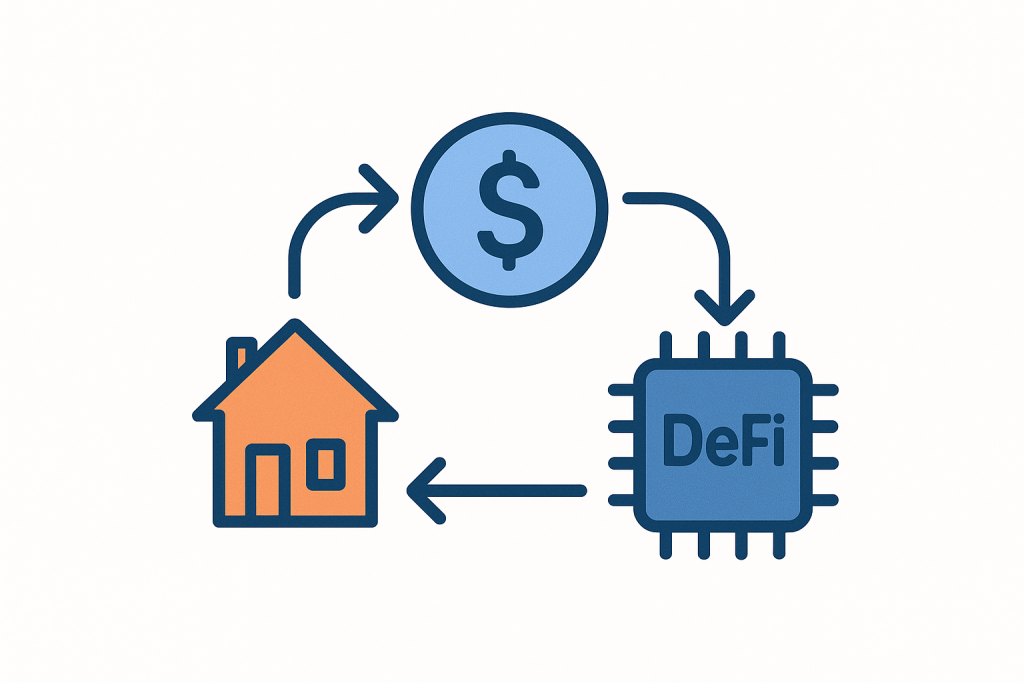
Real-world assets (RWAs)—homes, equipment, invoices, commodities, even future revenue streams—are starting to “meet” DeFi. The meeting point is collateral: once an asset is tokenized with legal-grade rights, it can be posted into on-chain lending, insurance, and risk-sharing markets. This creates a collision of three systems that were never designed to work together: physical collateral, programmable credit, and regulatory compliance. The opportunity is meaningful access and efficiency. The risk is designing markets that move fast without breaking trust.
Why This Matters
This convergence matters not just for finance people, but for families, schools, and communities because credit infrastructure quietly shapes everyday life.
Credit becomes more modular and potentially more inclusive.
Tokenized assets can lower barriers to using value as collateral. A small business could borrow against verified inventory. A school cooperative could finance lab equipment against future service income. A community solar project could raise capital using tokenized energy output as collateral. The promise isn’t “free money.” It’s a broader set of legitimate, verifiable collateral types.
Risk moves from opaque institutions to visible systems.
Traditional lending hides much of its logic inside bank models and paperwork. DeFi makes risk rules explicit—collateral ratios, liquidation triggers, insurance pools, and governance votes are visible on-chain. That visibility helps accountability, but it also means flaws in design show up immediately and at scale.
Compliance isn’t optional when real assets are involved.
Pure crypto DeFi markets could assume pseudonymity. RWAs can’t. They sit inside property law, securities law, consumer protection, sanctions regimes, and local tax systems. If compliance isn’t built into market design, RWA-DeFi either stays small or creates real-world harm.
This is a teachable moment for future literacy.
For educators and parents, RWA-DeFi is a practical case study in how systems converge: technology changes incentives, but law and governance decide legitimacy. Students can learn how trust is engineered, not assumed.
Here’s How We Think Through This (steps, grounded)
Step 1: Verify that the asset is tokenized with enforceable rights.
We do not treat “a token that points to something” as collateral.
We ask:
- Is there legal recognition tying token ownership to real-world rights?
- Is the claim enforceable in the relevant jurisdiction?
- Who is the authoritative registry or custodian?
Without this, on-chain collateral is only symbolic.
Step 2: Define the collateral behavior in physical terms.
Physical assets behave differently than crypto:
- real estate is illiquid and slow to foreclose
- equipment depreciates and needs maintenance
- commodities face custody and quality risk
- invoices rely on counterparty payment
We model how the asset can be seized, sold, insured, or revalued in reality—not just on-chain.
Step 3: Build the “reality pipeline” for valuations and status.
DeFi depends on continuous pricing. RWAs don’t naturally provide that.
We design credible inputs:
- appraisals and periodic audits
- IoT or service logs for equipment condition
- warehouse receipts for commodities
- payment performance data for receivables
Then we define update frequency and who is trusted to attest.
Step 4: Choose risk models that match volatility and liquidity.
Classic DeFi uses over-collateralization and rapid liquidation.
For RWAs we often need hybrids:
- higher initial collateral buffers
- slower liquidation windows
- insurance backstops for valuation gaps
- tranching (senior/junior risk layers)
The goal is to prevent “smart-contract speed” from colliding with “real-world slowness.”
Step 5: Embed compliance at the asset and market level.
Compliance-aware design typically includes:
- verifiable credentials for participant eligibility
- jurisdictional transfer rules
- AML/sanctions screening via regulated gateways
- reporting hooks for regulators and auditors
We treat compliance as part of the protocol, not paperwork around it.
Step 6: Design default paths for disputes and failures.
Real assets bring real conflict: damaged collateral, contested ownership, fraud, or force-majeure events.
We define:
- pause/override authorities
- arbitration or court-linked escalation
- recovery procedures if tokens are stolen
- how claims are prioritized in bankruptcy
A system without failure paths is not ready for RWAs.
Step 7: Evaluate who benefits and who is exposed.
We stress-test social impact:
- Are small participants protected from predatory liquidation?
- Are communities able to exit fairly?
- Does the design privilege insiders with better data access?
We aim for markets that increase participation without shifting hidden risk to non-experts.
What is Often Seen as a Future Trend — Real-World Insight
This topic is often framed as “DeFi will unlock trillions in real-world value.” That’s a headline. The practical story is slower and more institutional.
What we’re actually seeing:
The first wave is conservative: private, permissioned, and compliant.
Serious RWA-DeFi pilots start with whitelisted participants, regulated custodians, and legally wrapped assets. This isn’t a failure of DeFi ideals—it’s the necessary bridge to real-world legitimacy.
Insurance becomes the quiet cornerstone.
As RWAs enter on-chain lending, the limiting factor is not borrowing demand. It’s confidence in downside protection when valuations lag or custody breaks. Expect growth in on-chain insurance pools tied to specific asset classes (equipment, trade finance, property).
Liquidation logic is being reinvented.
Instant liquidations work for crypto because markets are deep and 24/7. For real assets, liquidation is a process, not an event. Protocols are experimenting with auction windows, negotiated workouts, and off-chain enforcement triggers.
Compliance will define the winners.
Protocols that bake identity, auditability, and regulated interfaces into their design will attract institutional capital and real adoption. Those that don’t will remain speculative niches.
The takeaway: when real assets meet DeFi, the real innovation isn’t “collateral on-chain.” It’s markets that can carry real-world rights, real-world risk, and real-world compliance at digital speed without losing trust.