
Quick Insight
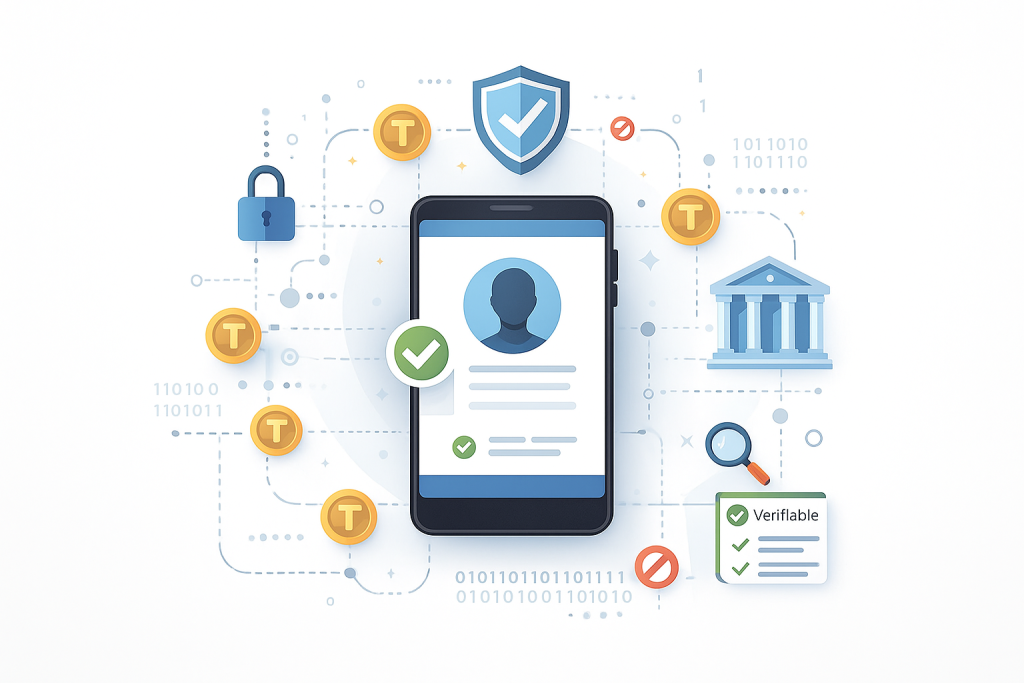
The next chapter of token regulation won’t be written only in laws—it will be written in infrastructure. As governments and markets try to reconcile open blockchain systems with real-world accountability, a new “compliance layer” is forming. This layer blends KYC/AML requirements, digital identity wallets, verifiable credentials, and privacy-preserving tools like zero-knowledge proofs.
Instead of asking every platform to reinvent compliance, regulators are moving toward a world where identity and risk checks travel with the user and the asset, across apps, borders, and ecosystems.
Why This Matters
On-chain identity is not about turning blockchains into surveillance networks. It’s about making digital markets safe enough to scale without losing the openness that makes them useful.
For builders and platforms
Compliance is becoming modular. If identity proofs can be verified on-chain, platforms can plug into standardized checks rather than building brittle, region-specific processes. This reduces regulatory risk and improves user experience—especially for global products. It also changes token design: features like transfer restrictions, access tiers, or jurisdictional rules can be enforced automatically.
For investors and institutions
Identity-enabled tokens open doors to bigger liquidity. Many large institutions have stayed cautious because they can’t manage counterparty risk in anonymous environments. Reliable on-chain identity, with privacy controls, makes regulated participation possible in ways that legacy systems can audit.
For parents and educators
On-chain identity may sound distant, but it’s likely to shape everyday digital life. The same identity wallets used for tokens can also hold credentials for learning, age verification, community membership, or family-approved spending. The deeper shift is this: digital trust will become portable. That makes online spaces safer while giving individuals more control over what they share.
In short, on-chain identity is becoming the “seatbelt” that lets token systems move from experimental to mainstream.
Here’s How We Think Through This (steps, grounded)
Step 1: Separate identity from exposure.
A common misunderstanding is that “identity on-chain” means your name is public. In practice, the goal is the opposite: prove what’s needed without revealing everything.
Future systems will focus on selective disclosure: a user can prove they’re over 18, located in a permitted region, or not on a sanctions list, without broadcasting their full identity.
Step 2: Treat KYC/AML as reusable credentials, not repeated paperwork.
Today, compliance is fragmented: each exchange or app re-does the same checks. On-chain identity flips this.
A regulated verifier confirms a user once and issues a verifiable credential. That credential can be re-used across platforms, reducing friction and raising trust. Instead of “upload your passport again,” the flow becomes “present proof of verified status.”
Step 3: Expect identity wallets to become as normal as payment wallets.
Digital identity wallets will store multiple kinds of credentials:
- KYC status
- Proof of residency or jurisdiction eligibility
- Organizational role (student, teacher, employee, accredited investor)
- Previous compliance history (e.g., no fraud flags)
Users won’t carry one identity—they’ll carry a portfolio of proofs tailored to different contexts.
Step 4: Understand zero-knowledge proofs as the privacy engine.
Zero-knowledge proofs (ZKPs) let someone prove a statement is true without revealing the underlying data.
Examples regulators care about:
- “This wallet belongs to a KYC-verified user.”
- “This transfer does not violate sanctions.”
- “This buyer meets an accredited investor threshold.”
ZKPs are the bridge between regulatory needs and user rights. They allow enforcement without over-collection.
Step 5: Watch for “compliance-aware tokens.”
Tokens will increasingly include compliance hooks at the protocol level:
- Transfer rules based on verified attributes
- Automatic reporting triggers for specific activity
- Jurisdiction-based access controls
- Whitelists for regulated markets
This doesn’t mean every token becomes permissioned. It means compliance can be optional, programmable, and context-specific—and that flexibility is what regulators and markets both need.
Step 6: Plan for a mixed world, not a single standard.
There won’t be one universal identity system. Instead, we’ll see interoperable networks: different providers, regions, and verification levels that recognize each other under shared technical standards.
Builders should design for multiple credential sources and verification methods from day one.
What is Often Seen as a future trend: real-world insight
Trend people talk about: “On-chain identity will kill anonymity and push users away.”
What we actually see: The market is moving toward privacy-preserving accountability, not blanket identity exposure. Real-world adoption depends on getting both sides right:
- Regulators want enforceability.
They need to know that consumer protections, sanctions rules, and anti-fraud controls can actually work. - Users want dignity and control.
They don’t want their finances, learning records, or personal details readable by strangers or permanently traceable.
The compromise is emerging in the form of tiered identity:
- Low-risk activities stay lightweight and privacy-first.
- Higher-risk activities require stronger proofs.
- Proofs are shared minimally, sometimes only as ZK attestations.
This is similar to the physical world: you don’t show your passport to buy a notebook, but you do to open a bank account. Digital identity is being built to mirror that logic—only more portable and more controllable by the individual.
For future-curious families and schools, the key insight is that identity wallets may become a multipurpose trust tool: not just for tokens, but for safe participation in digital communities. For builders, the insight is even sharper: products that embrace the compliance layer early will be the ones that can operate globally without constant redesign.