
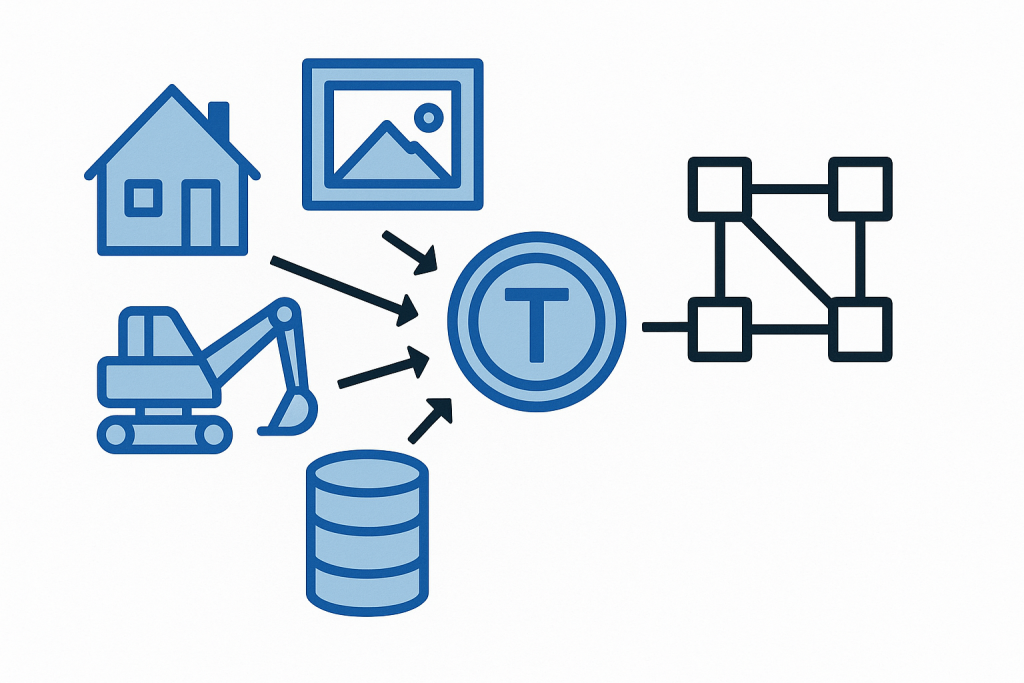
Physical–digital asset convergence is not really about flashy NFTs or speculative markets. It’s about infrastructure: a way for real-world objects—homes, art, machines, commodities, even future income streams—to gain a reliable digital representation (“tokens”) that can be owned, traded, financed, and governed with far less friction than today. Blockchain matters here because it provides shared, tamper-resistant records and programmable rules. That combination turns “Who owns what?” and “What can we do with it?” into questions answered by code plus verifiable history, rather than paperwork plus trust in intermediaries.
Why This Matters
For future-curious families, parents, and educators, tokenization can feel far away from daily life. But the shift it signals is close to home: society is building a new layer of ownership and coordination for the physical world.
Three big reasons this matters:
First, ownership becomes more flexible.
Assets that are hard to divide or transfer today—property, high-value tools, solar installations, or community resources—can be represented digitally in precise fractions. This doesn’t automatically mean “everyone buys a slice of everything.” It means ownership can match real use cases: shared family inheritance, micro-investment in local projects, or collective stewardship of community assets.
Second, trust becomes more portable.
When a real-world asset has a digital twin with clear provenance, maintenance history, and rights encoded, trust doesn’t have to be rebuilt every time it changes hands. Imagine buying second-hand equipment with a verifiable service log, or renting a home where deposit rules and compliance checks are embedded in the agreement.
Third, new civic and educational models become possible.
If assets can be digitally governed, communities can experiment with shared ownership models—school labs, sports facilities, public art, local energy equipment—where rules aren’t vague promises but transparent systems. For educators, this creates a practical context to teach digital literacy, economics, and ethics through real examples instead of abstract theory.
Tokenization is not automatically “good.” It introduces design choices about who benefits, who is excluded, and how disputes are resolved. But it is becoming a foundational tool for how physical value will be coordinated in the digital age.
Here’s How We Think Through This (steps, grounded)
Step 1: Start with the asset, not the blockchain.
Ask: what is the real-world object, and what’s the job we want its digital representation to do?
Examples:
- A home token might support fractional co-ownership or faster collateralization for loans.
- A piece of art token might preserve provenance and enable shared investment.
- A machine token might automate leasing, insurance, and usage-based payments.
If the digital layer doesn’t reduce a real cost or risk, tokenization is unnecessary.
Step 2: Define the “rights bundle.”
A token is only meaningful if it maps to specific rights in the physical world.
Rights might include: ownership, usage, revenue share, voting power, or access.
This is where legal and social systems meet technology. A token without enforceable rights is just a label.
Step 3: Build a trustworthy data pipeline.
The blockchain can secure records, but it can’t verify the physical world by itself.
So we ask: how does reality enter the system?
This may involve inspections, IoT sensors, certified registries, or audited records. The quality of this “bridge” determines whether the token is a reliable digital twin or a fragile proxy.
Step 4: Design governance before liquidity.
Many token projects chase “tradability” first. We flip that.
Who can make changes? What happens in disputes? How are upgrades handled?
For parents and educators, this is a valuable lens: students can learn that technology doesn’t remove governance—it makes governance explicit.
Step 5: Ensure compliance and safeguards are native, not bolted on.
Real-world assets live inside regulation. Property law, securities rules, consumer protections, safety standards—all apply.
Good tokenization systems encode compliance into the workflow so participants don’t need specialist knowledge just to stay safe.
Step 6: Measure success in reduced friction and better trust.
We look for concrete outcomes:
- faster settlement times
- lower transaction costs
- clearer provenance
- fewer disputes
- easier financing
If these aren’t improving, digitization is not yet delivering value.
What is Often Seen as a Future Trend — Real-World Insight
The popular story frames tokenization as a “trend” like a new financial product. But in practice, it looks more like the evolution of plumbing beneath value flows.
Here’s what we’re already seeing on the ground:
Tokenization is quietly entering boring, high-value sectors first.
Supply chains, commercial real estate, equipment leasing, and commodities trading are early adopters—because paper-based trust is expensive there. These sectors don’t need hype; they need operational savings and auditability.
The real breakthrough is interoperability, not speculation.
The future isn’t “everything becomes a token.” It’s that tokens can work across systems. A farm’s equipment token could connect to insurance, financing, maintenance providers, and resale markets without re-verifying everything each time. That is infrastructure.
Education and workforce implications are bigger than most people realize.
Students won’t just need to understand “what blockchain is.” They’ll need to understand:
- how digital rights map to real rights
- how data integrity is maintained
- how governance works in programmable systems
This is a new kind of civic literacy about ownership, not a niche technical skill.
Communities will test shared-asset models.
We expect more experiments where local groups token-govern physical resources: neighborhood solar arrays, school or maker-space equipment, shared mobility fleets, or cultural assets. These models won’t replace existing systems overnight, but they will create alternatives where traditional ownership is too rigid.
The key point: tokenization is becoming a way to organize trust around physical value. Like previous infrastructure shifts—property registries, digital banking rails, cloud computing—it will be most visible in hindsight, after it has already changed how everyday systems work.