
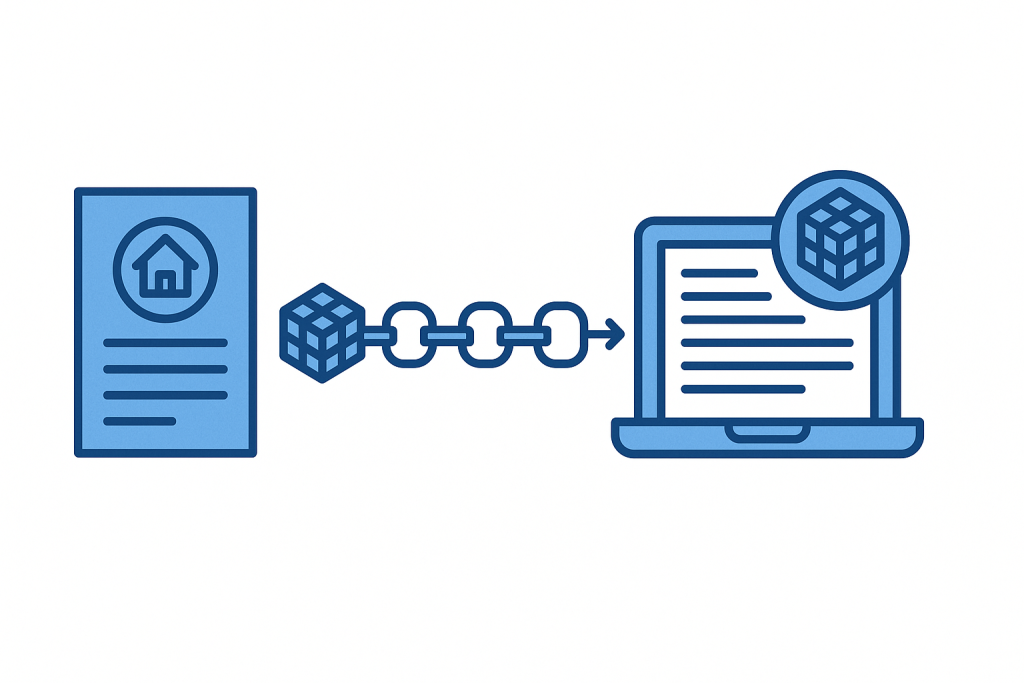
Asset markets have always run on registries: land title offices, securities depositories, IP databases, and carbon credit ledgers. These systems are the “paper memory” of ownership. The shift now underway is toward real-time on-chain records—shared databases where ownership, transfers, encumbrances, and compliance events update continuously, with tamper-resistant audit trails. This is not a simple replacement story. The next decade will be defined by hybrid models where legacy registries synchronize with on-chain systems, and regulators rebuild reporting and anti-fraud frameworks to match the speed and programmability of digital ownership.
Why This Matters
This evolution is technical, but its consequences are everyday and social. Ownership systems influence housing security, savings, innovation, and trust in public institutions.
Markets get faster, but only if trust keeps up.
Paper-based registries were designed for slower economies. A property transfer can still take weeks, securities settlement can involve multiple intermediaries, and carbon credit verification often trails reality by months. On-chain records compress these timelines toward near-instant settlement. That increases efficiency, but it also raises the stakes for accuracy and governance.
Fraud prevention shifts from detective work to system design.
Legacy registries catch fraud after the fact: audits, disputes, and legal proceedings. On-chain models aim to prevent fraud upfront through cryptographic proofs, programmable rules, and continuous traceability. Regulators must move from “inspect later” to “encode safeguards earlier.”
Families and communities will feel the effects first through real assets.
Real estate, inheritance, small business ownership, and community-financed infrastructure depend on registries. If registry systems become more real-time and interoperable, families may see faster lending, clearer shared ownership, and fewer bureaucratic bottlenecks. If they modernize poorly, the opposite happens: faster disputes and new forms of exclusion.
Education needs to expand what “property literacy” means.
Students will grow up in a world where a “registry” might be a smart contract and a “title” might be a wallet entry backed by law. Understanding the difference between a record, a right, and a proof becomes essential civic knowledge.
Here’s How We Think Through This (steps, grounded)
Step 1: Start with the registry’s real job.
Every registry does three things:
- establishes authoritative ownership
- records transfers and claims (liens, mortgages, licenses)
- enables enforcement through courts and regulators
We assess whether on-chain systems can fulfill these jobs better, not whether they are newer.
Step 2: Distinguish “recording” from “recognition.”
A blockchain can record ownership. But only law can recognize ownership.
We ask:
- Is an on-chain entry legally equivalent to registry entry?
- If not yet, what hybrid linkage is required?
This is why transition models matter more than pure-chain ambition.
Step 3: Identify what must stay off-chain.
Not every detail belongs on a public ledger. We define boundaries:
- sensitive personal data
- commercially confidential terms
- information that changes frequently without legal effect
We design systems where proofs travel on-chain while protected data stays off-chain.
Step 4: Build synchronization and dispute pathways.
Hybrid registries need clean “two-way truth”:
- legacy registry validates real-world rights
- on-chain ledger automates transfer and compliance
- both systems reconcile continuously
We also define override logic: who can reverse, pause, or amend entries in rare but necessary cases.
Step 5: Encode compliance as part of the transaction.
Regulators care about:
- identity and eligibility of participants
- anti-money-laundering checks
- limits on who can hold or transfer certain assets
- disclosure requirements
In on-chain markets, compliance can be embedded in the transfer rules rather than enforced only through periodic reporting.
Step 6: Redesign anti-fraud for real-time markets.
Fraud detection shifts toward:
- verifiable credentials for participant identity
- provenance and custody trails for assets
- automated anomaly detection on transaction graphs
- standardized attestations from trusted issuers
The goal is continuous prevention, not occasional cleanup.
Step 7: Measure success in fewer disputes and lower friction.
We look for outcomes like:
- shorter settlement times
- reduced reconciliation work
- clearer chain of title
- faster, safer credit access
- measurable drop in fraud and paperwork errors
If these don’t improve, “on-chain” is just a relabeling.
What is Often Seen as a Future Trend — Real-World Insight
This shift is often described as a dramatic leap “from paper to blockchain.” The real transition is more incremental and institutional.
Here’s what’s playing out in practice:
Hybrid registries are the near-term reality.
Governments and regulated industries don’t flip a switch. They layer. Expect years where a land registry or securities depository remains authoritative while an on-chain layer handles real-time transfers and automated compliance. The winners will be systems that synchronize smoothly, not those that claim to replace everything overnight.
Regulatory modernization is becoming the pacing item.
The technology already supports real-time ledgers. The bottleneck is adapting law:
- defining legal equivalence of on-chain records
- standardizing digital identity and proof frameworks
- updating reporting intervals to continuous models
- clarifying jurisdiction when assets are globally tradable
Markets will move at the speed regulators can safely redesign oversight.
Carbon and IP registries are early indicators.
These registries are already digital-native and globally networked, making them natural places to pilot on-chain verification and transfer. Expect lessons from these domains to shape later modernization of land and securities.
The social risk is not just fraud; it’s access.
On-chain systems can lower barriers, but only if identity, usability, and legal protections are built for everyday people. Otherwise, speed advantages go to sophisticated actors while families and communities are left navigating unfamiliar rules.
The takeaway: markets without paper are not markets without rules. They are markets where rules become programmable and oversight becomes continuous. The hard work is aligning cryptographic truth with legal truth—so real-time ownership strengthens trust instead of eroding it.