
Quick Insight
Real estate has traditionally been one of the most stable yet least liquid investment classes. While properties can hold and grow value over time, converting that value into cash—or reallocating it to new opportunities—has always been slow, expensive, and complicated.
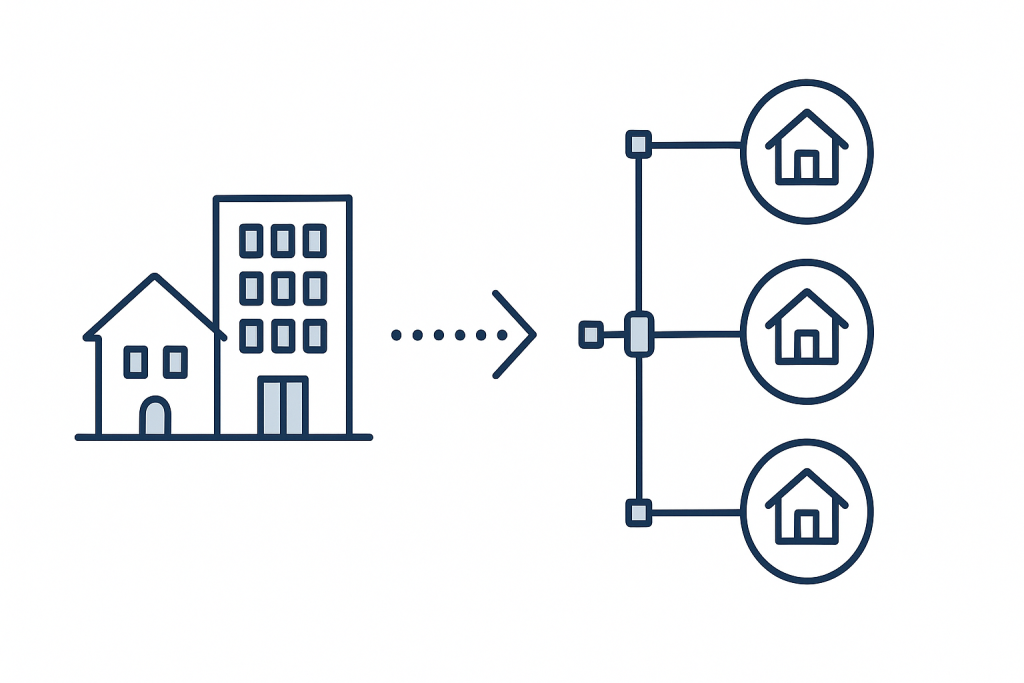
Tokenization is changing this. By converting real estate assets into digital tokens on a blockchain, ownership can be divided, exchanged, and traded with unprecedented ease. It’s a transformation comparable to when private companies first entered public markets—only this time, it’s happening to physical assets that used to be locked behind deeds and paperwork.
Why This Matters
Liquidity defines how dynamic an economy can be. Traditionally, property ownership has been a long-term, illiquid commitment, limiting who can participate and how quickly capital can move. Tokenization introduces fractional ownership and instant tradability, making real estate function more like a liquid financial asset.
For investors, this means the ability to diversify portfolios with smaller, flexible positions in global property markets. For educators and families, it signals a fundamental shift in how future generations will perceive ownership—not as something fixed and immovable, but as something fluid, digital, and accessible.
This liquidity revolution could democratize wealth creation and blur the lines between traditional investment classes, allowing everyday investors to engage in what was once an elite domain.
Here’s How We Think Through This
- Identify the Illiquidity Problem
Real estate markets are slow because they rely on intermediaries, manual documentation, and localized transactions. Selling a property can take months. Even REITs (Real Estate Investment Trusts), which aimed to bring some liquidity, remain limited in accessibility and flexibility. - Understand Tokenization as a Financial Layer
Tokenization creates a digital representation of real property—each token tied to a verified share of ownership or rights. This allows properties (or portions of them) to be traded on digital exchanges under regulatory oversight, much like equities in public markets. - Model Liquidity Through Market Design
Liquidity arises when there’s a secure, transparent, and continuous marketplace. Blockchain enables this by standardizing ownership verification, settlement, and compliance through smart contracts. Instead of waiting weeks, transactions can occur within minutes. - Assess Regulatory and Custodial Considerations
A critical part of tokenized markets is ensuring the connection between digital tokens and physical assets remains legally sound. Jurisdictions are now evolving frameworks that blend property law with securities law, enabling compliant marketplaces where tokens represent tangible, enforceable ownership. - Anticipate Portfolio Implications
Tokenized real estate allows investors to hold fractional property exposure alongside traditional stocks, bonds, and digital assets. This diversification reduces volatility and opens opportunities for global participation without geographic or financial barriers.
What Is Often Seen as a Future Trend — Real-World Insight
Several platforms and governments are already putting this liquidity model into practice:
- RealT and Lofty AI have built active marketplaces for fractional real estate investments, where investors can buy and trade small property shares.
- Switzerland and Singapore are piloting tokenized property exchanges that comply with both financial and property law.
- Institutional players like BlackRock have begun exploring blockchain infrastructure for alternative asset tokenization, signaling mainstream acceptance.
These developments show that real estate liquidity is no longer a distant concept—it’s an evolving market infrastructure. Just as the stock market transformed capital formation in the 20th century, tokenized real estate could redefine asset ownership in the 21st.
For educators and parents, the key insight is this: financial literacy now extends beyond traditional investing. Understanding how digital systems create liquidity—and how trust is coded into technology—will be essential for tomorrow’s investors and civic leaders.