
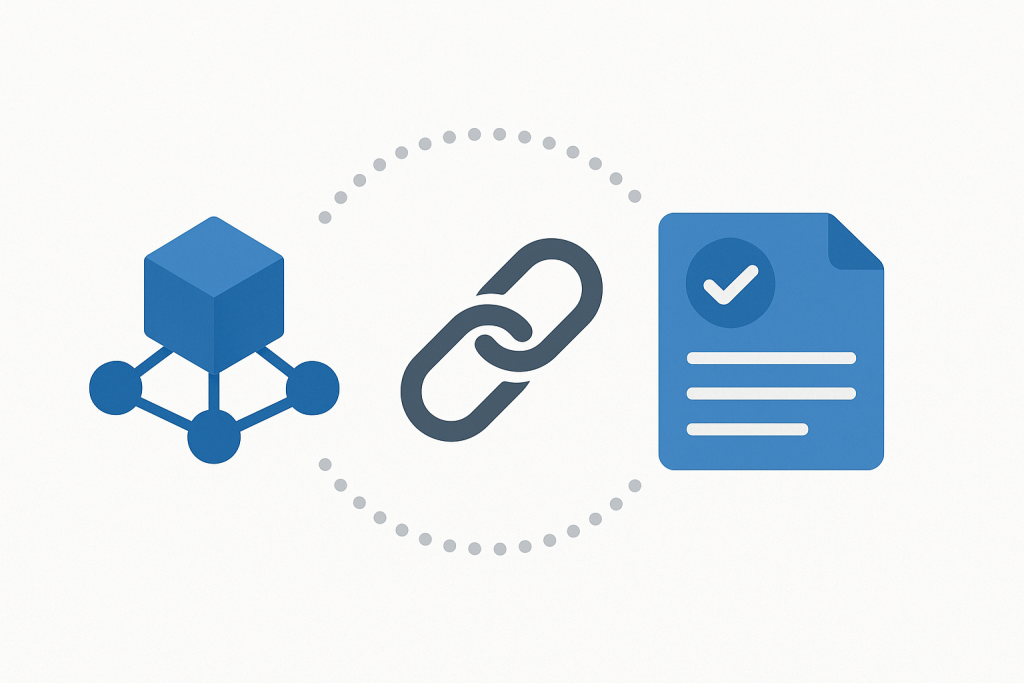
Physical–digital asset convergence isn’t being held back by a lack of blockchains or token projects. It’s being held back by a lack of shared language. Interoperability—common token formats, consistent metadata, embedded compliance hooks, and reliable cross-chain verification—is the real revolution. When assets “speak the same standards,” they can move across markets, institutions, and applications without being re-verified from scratch each time. That’s what turns tokenization from isolated pilots into durable infrastructure.
Why This Matters
Interoperability can sound abstract, but it shapes whether these systems become useful for normal people—or stay trapped inside tech bubbles.
It determines whether digital ownership is portable.
If a tokenized home deed only works on one platform, you haven’t modernized ownership—you’ve created a new silo. True portability means the asset can be recognized by banks, insurers, registries, marketplaces, and even future apps we haven’t invented yet. Standards make that possible.
It reduces the trust burden on families and communities.
Parents, schools, and local cooperatives don’t want to become blockchain experts to participate in shared assets. When standards exist, they can rely on predictable rules: what a token means, what rights it carries, what data proves its legitimacy, and how disputes or transfers are handled.
It enables safer innovation.
Educators often worry (rightly) that fast tech creates messy risks. Interoperability pushes the system toward clarity: shared definitions, auditable records, and compliance built into the asset format. That’s how innovation scales without pushing complexity onto users.
It’s how regulation keeps pace.
Regulators can’t adapt to thousands of bespoke token designs. Shared standards allow oversight to be systematic: the same reporting logic, the same anti-fraud checks, the same consumer protections across markets. Without this, real-world tokenization stays niche.
Here’s How We Think Through This (steps, grounded)
Step 1: Specify the asset class and use case first.
Interoperability is not a generic feature; it’s purpose-specific.
We ask:
- What is the asset (real estate, equipment, art, carbon credits, curriculum licenses)?
- What should it do (trade, collateralize, share revenue, prove provenance, govern access)?
Standards must match the asset’s real-world rights and risks.
Step 2: Define a shared token format.
A token format answers: “What kind of object is this on a ledger?”
Standard formats make tokens understandable across systems. They include:
- ownership representation (fungible vs. non-fungible vs. hybrid shares)
- rights fields (usage, revenue, voting, transfer limits)
- lifecycle states (issued, pledged, leased, retired)
If platforms invent their own formats, assets can’t travel.
Step 3: Make metadata consistent and meaningful.
Most of the “truth” about a real-world asset lives in metadata. Standards here cover:
- identity of the asset (unique IDs, batch numbers, title references)
- provenance and custody events
- condition or performance indicators (maintenance logs, sensor attestations)
- valuation and audit links
Interoperability depends on shared semantics, not just shared code.
Step 4: Embed compliance hooks in the asset design.
For regulated assets, token standards need built-in rules such as:
- who is eligible to hold or transfer
- identity proof requirements via verifiable credentials
- jurisdictional constraints
- reporting triggers for regulators or registries
This avoids “compliance later,” which is where many pilots stall.
Step 5: Ensure cross-chain verification is reliable.
No single chain will host everything. So we require:
- proofs that a token on Chain A equals a recognized claim on Chain B
- standardized bridge attestations
- clear finality rules (when a transfer is truly settled)
Cross-chain trust is less about speed and more about preventing double-claims or ambiguous state.
Step 6: Design for upgrades without breaking trust.
Assets last longer than software versions. Standards must allow:
- backward compatibility
- versioning of token formats
- governed upgrade paths
Otherwise, an asset’s digital twin becomes obsolete every time the tech stack changes.
Step 7: Test interoperability under real conditions.
We validate by simulating real flows:
- a tokenized asset moving between marketplace, lender, insurer, and registry
- selective disclosure of proofs under privacy rules
- dispute or loss scenarios
If the asset can’t move cleanly across parties, interoperability is still theoretical.
What is Often Seen as a Future Trend — Real-World Insight
Interoperability is often treated like a technical “nice-to-have.” In practice, it’s the difference between a network and a pile of apps.
What we’re seeing on the ground:
Standards emerge where the incentives to cooperate are strongest.
Supply chains, carbon markets, and financial instruments are already moving toward shared schemas because the cost of mismatched data is high. That’s a preview of what will happen in property, education credentials, and civic assets.
The winning platforms will be the most compatible, not the most proprietary.
History repeats here. The internet scaled because email, web, and payment protocols became universal enough to connect competitors. Tokenization will scale the same way. “Best chain” matters less than “shared language across chains.”
Interoperability changes who can participate.
When standards lower friction, smaller players can join: schools co-owning equipment, towns financing solar grids, families sharing property rights across borders. Without standards, only large institutions can absorb the integration costs.
Education is a quiet driver.
Digital credentials for learning, skills, and access rights are becoming structured, portable, and verifiable. As these credentials merge with tokenized ownership, interoperability will shape how students prove achievements and participate in real-world value systems.
The takeaway: interoperability isn’t the final polish on tokenization. It is the foundation. Shared standards are what let physical and digital assets function as one coherent economy.