Quick Insight
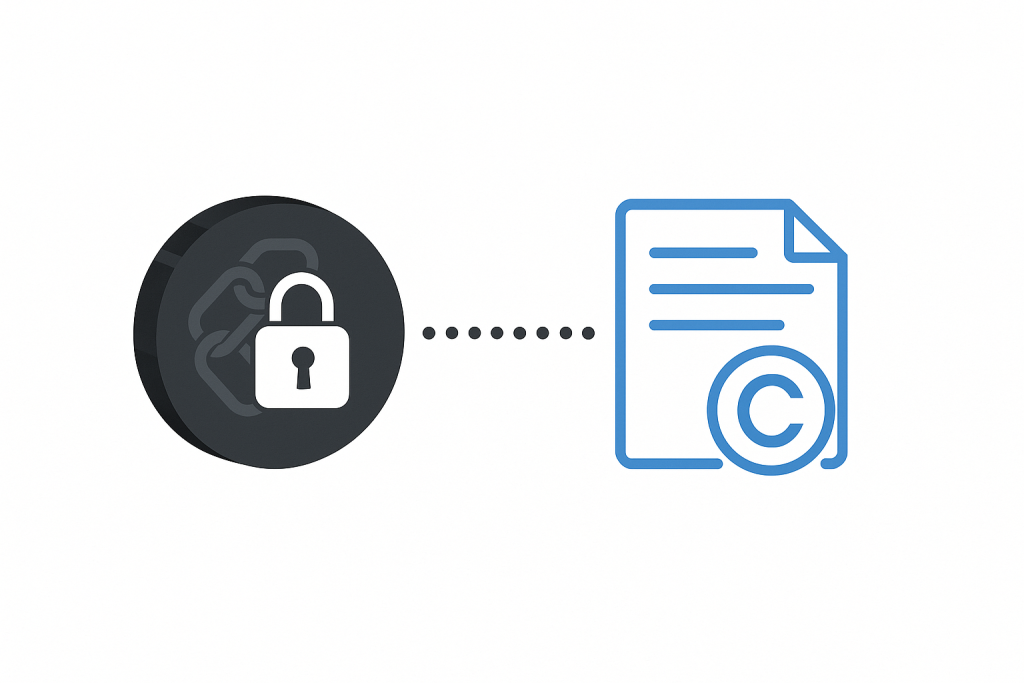
Ownership in the digital world is undergoing a quiet revolution. Instead of relying on traditional copyright law and legal intermediaries, blockchain technology is making it possible to encode ownership directly into the digital asset itself. Tokenized intellectual property (IP) and smart contracts are transforming what used to be static legal documents into dynamic, self-enforcing systems—turning copyright into what we might call Smart Right.
This shift allows creators, educators, and innovators to manage and monetize their work with unprecedented precision, transparency, and autonomy.
Why This Matters
Copyright has historically depended on trust, enforcement, and legal interpretation—mechanisms that are often slow, costly, and difficult to manage across borders. As digital creation accelerates, these traditional systems struggle to keep pace with the realities of remix culture, AI-generated content, and global digital collaboration.
Smart rights, powered by blockchain, reimagine this landscape:
- Programmable ownership: Rights and permissions can be coded directly into digital files.
- Instant enforcement: Smart contracts automatically execute usage terms, royalties, and expirations.
- Global transparency: Every transaction or usage is recorded on-chain, visible and verifiable by all.
This doesn’t just streamline rights management—it redefines what it means to own and share creative work in a world where duplication is effortless.
Here’s How We Think Through This
(A grounded framework for understanding Smart Rights)
- Identify the pain points in current systems.
The copyright ecosystem relies heavily on paperwork, registration, and human arbitration. Disputes are slow, cross-jurisdiction enforcement is complex, and creators often lose revenue or control. The first step is mapping these friction points clearly. - Understand the role of tokenization.
Tokenization converts an asset (like a song, design, or article) into a unique, verifiable digital token on the blockchain. This token doesn’t just represent ownership—it is ownership, carrying with it the conditions of use and provenance. - Apply smart contracts as enforcement logic.
Instead of filing a takedown notice, a smart contract can automatically withhold access, distribute royalties, or limit use based on pre-set terms. The law becomes executable code, reducing dependency on human intermediaries. - Design for interoperability and education.
For parents, educators, and young creators, it’s essential to understand that Smart Rights aren’t only for musicians or tech professionals. They form the foundation for how digital learning resources, AI-generated media, and even personal data will be owned and traded in the near future. - Consider ethics and governance early.
A programmable rights system is powerful—but who writes the code, and who gets to change it? Designing governance frameworks that ensure fairness, accessibility, and long-term accountability is as important as the technology itself.
What Is Often Seen as a “Future Trend” (and the Real-World Insight)
Smart rights are often portrayed as futuristic, but the transition has already begun. Platforms for NFT-based IP licensing, blockchain-verified authorship, and decentralized digital registries are operational today. Forward-looking universities are exploring blockchain credentials for learning content.
The real-world insight: The line between legal documentation and digital functionality is blurring. Ownership is no longer merely declared—it is executed through code. For those raising or educating the next generation of creators, understanding Smart Rights is foundational. It’s not just a legal evolution—it’s the architecture of digital trust.