
Quick Insight
As countries and private innovators accelerate the shift toward digital currencies, a crucial ethical question emerges: Will these systems expand financial inclusion—or create new forms of digital dependence?
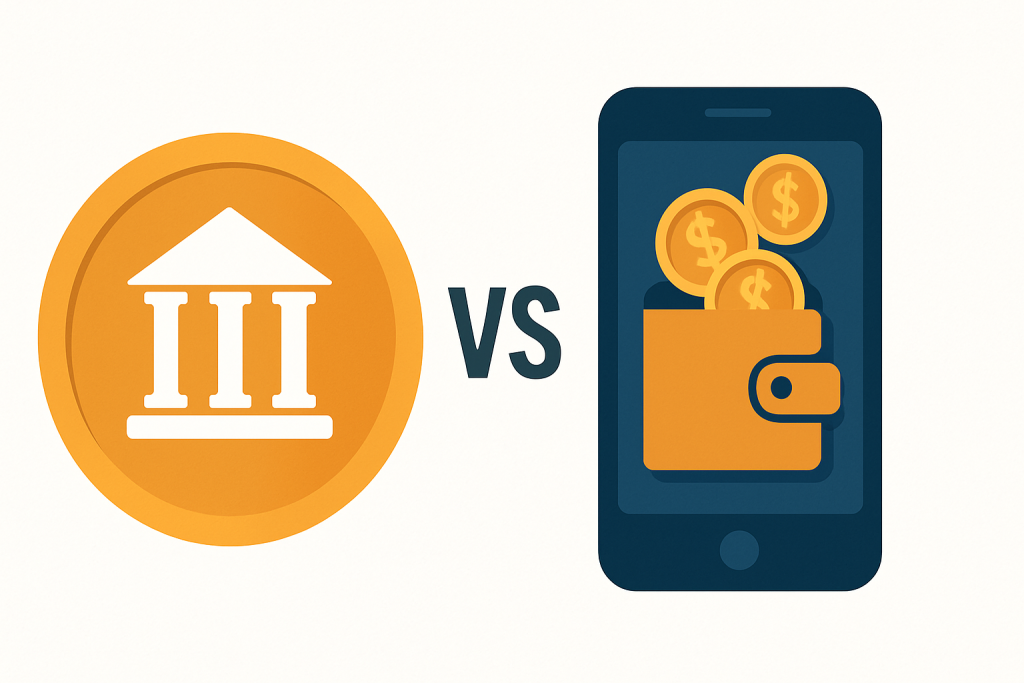
CBDCs (central bank digital currencies) promise universal access backed by government stability. Stablecoins promise low-cost, borderless transactions powered by private innovation. Yet both can either empower underserved populations or deepen inequities, depending on how they are designed, governed, and distributed.
The key insight: Technology alone does not guarantee inclusion. Governance, access, and safeguards determine whether digital currency systems liberate or constrain.
Why This Matters
Digital currencies are not simply another payment option—they are becoming the foundations of future economic participation. For billions of people in emerging economies, the stakes are especially high.
The ethical implications include:
- Access: Who can participate if digital IDs or high-end devices are required?
- Cost: Will transaction fees shrink—or will new intermediaries create hidden costs?
- Privacy: How much financial behavior becomes visible to governments or corporations?
- Autonomy: Will citizens control their digital wallets, or will platforms control their financial activity?
- Resilience: What happens during outages, political instability, or network failures?
The path to inclusion is real—but so is the risk of building systems that create dependence rather than empowerment.
Here’s How We Think Through This
Step 1: Clarify What “Inclusion” Actually Means
Inclusion is not just access to a wallet. It’s the ability to save, transact, earn, and build financial identity without barriers. We evaluate whether digital currencies reduce or reinforce existing systemic hurdles.
Step 2: Examine the On-Ramp Requirements
Stablecoins often require smartphones and internet access. CBDCs may require government-issued digital IDs. If the on-ramp is too narrow, the people who need inclusion most are the first to be excluded.
Step 3: Analyze Governance Structures
CBDCs centralize control—raising concerns over surveillance and political misuse.
Stablecoins decentralize issuance but often centralize corporate power, especially if reserves or platforms lack transparency.
Ethical systems require governance models that embed fairness, accountability, and citizen rights—not just efficiency.
Step 4: Assess Incentive Alignment
Who benefits when digital currency adoption increases?
- Governments may gain policy precision and traceability.
- Corporations may gain user data and market control.
- Citizens should gain security, affordability, and financial agency.
We evaluate systems based on whether citizen benefit is primary or secondary.
Step 5: Stress-Test in Real-World Scenarios
Outages, authoritarian drift, predatory lending, or loss of digital identity can quickly turn inclusion into vulnerability. Responsible digital currency design anticipates and mitigates these risks before deployment.
What Is Often Seen as a “Future Trend” — Real-World Insight
The ethical debate is not hypothetical. It is unfolding globally right now:
- Nigeria’s CBDC rollout showed that adoption cannot be mandated—trust must be earned.
- Latin American stablecoin ecosystems demonstrate real value in low-cost remittances but also reveal dependence on corporate-run currency rails.
- China’s digital yuan illustrates how CBDCs can increase state visibility over transactions, raising questions about personal autonomy.
- Small fintech-led programs in Kenya and Southeast Asia show how digital wallets can foster financial growth—when paired with education and strong consumer protections.
- Humanitarian aid organizations are experimenting with tokenized vouchers but face challenges around device access and digital ID requirements.
The pattern is clear: digital currencies have the potential to broaden inclusion only when they are built with the most vulnerable users in mind.
The ethical challenge of the next decade is ensuring that technological innovation does not unintentionally replace financial exclusion with digital dependence.
The goal is not just digital currency access—it is digital financial dignity.