
Quick Insight
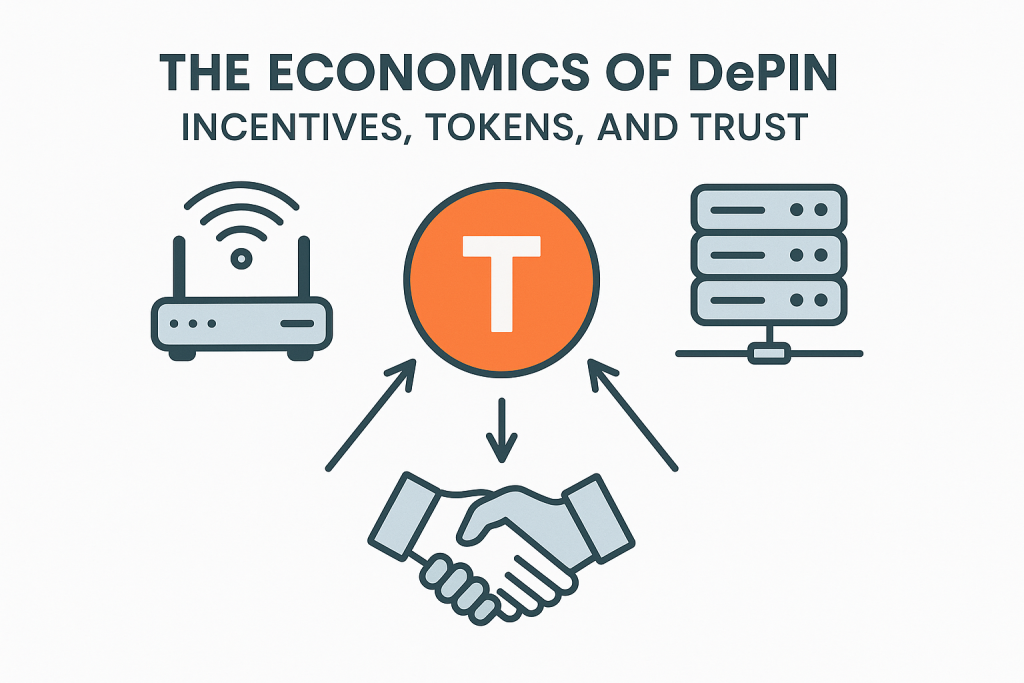
Decentralized Physical Infrastructure Networks (DePIN) are redefining how we build and maintain real-world systems—networks, energy grids, and sensor data frameworks. What makes them function isn’t just technology; it’s economics. At the heart of every DePIN network lies an incentive system that aligns personal participation with collective value creation. Through token-based rewards and transparent verification, users earn by contributing tangible resources such as bandwidth, storage, or compute power. These tokenized economies transform infrastructure from something we consume into something we co-own.
Why This Matters
Traditional infrastructure systems rely on centralized ownership and top-down management. Companies or governments build the networks, while individuals simply use them—paying fees, following terms, and trusting centralized control. DePIN reverses this logic.
By using blockchain-based tokens, participants become both providers and beneficiaries. If you run a wireless hotspot (as in the Helium network), share storage space (like Filecoin), or contribute sensor data for environmental monitoring, you earn digital tokens tied to your measurable contribution.
This creates a trust economy—where rewards are transparent, contributions are verified on-chain, and ownership is distributed. For educators and parents, it represents a powerful model to help future generations understand the intersection of economics, technology, and collaboration. In a world where digital trust and real-world impact are increasingly linked, DePIN teaches a new kind of literacy: value creation through participation.
Here’s How We Think Through This
1. Identify the Resource Being Contributed.
Every DePIN system starts with a physical or digital input—compute cycles, network coverage, energy generation, sensor data, or storage. Understanding the resource is key to understanding the economics.
2. Measure Contribution and Verify Trustlessly.
Blockchain protocols allow networks to record and verify contributions automatically. Proof mechanisms—like “Proof of Coverage” or “Proof of Storage”—ensure accuracy without a central authority. This layer of verifiability replaces the need for traditional corporate oversight.
3. Align Incentives with Utility.
Tokens aren’t just speculative assets; they represent access, rights, or rewards. The most successful DePIN projects ensure that tokens serve real utility—granting bandwidth, storage, or compute—rather than functioning solely as investment instruments.
4. Build Economic Feedback Loops.
Healthy token economies balance reward distribution with network demand. As more people use the network’s services, token value and participation incentives stabilize, creating sustainable growth rather than short-term hype.
5. Govern Transparently.
DePIN networks evolve through community-based governance. Contributors can vote on policies, pricing, and protocol upgrades, reinforcing trust through shared decision-making rather than opaque corporate control.
What Is Often Seen as a Future Trend
Many see tokenized infrastructure as a niche experiment in Web3 economics, but it’s rapidly becoming a practical reality. Helium’s wireless network compensates users for providing coverage to IoT devices. Filecoin pays storage providers across the world. Render Network rewards GPU owners for contributing processing power to distributed rendering tasks.
The deeper insight is that DePIN’s economics are about real value, not speculation. Tokens function as coordination tools—creating measurable incentives for real-world work. They build systems that reward trust, transparency, and contribution at a human level.
For the next generation, this shift points toward a future where participating in global infrastructure could be as natural as logging into the internet—only this time, you’re not just connected; you’re invested.