
Quick Insight
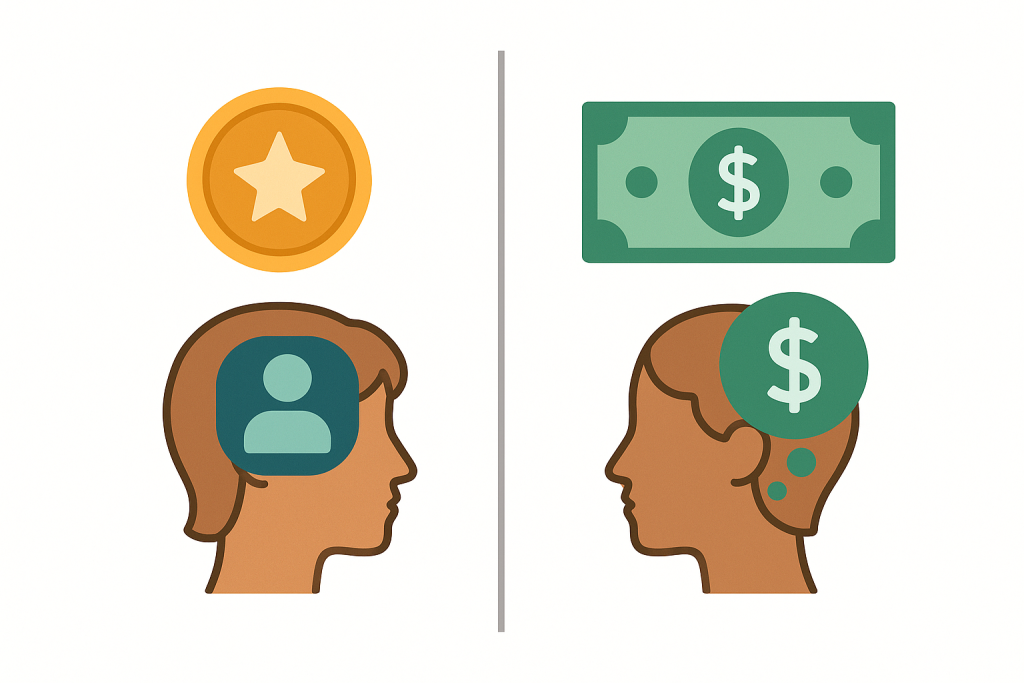
Tokens—whether earned in a game, received in a learning platform, or held as part of a digital ecosystem—carry a different psychological weight than cash. They feel more personal, more controllable, and more connected to identity or participation. Understanding why young people perceive digital assets differently helps parents and educators guide them toward healthier financial habits in an increasingly tokenized world.
Why This Matters
Young learners already interact with digital assets daily, often with strong emotional attachment—but without a clear understanding of value.
Traditional money is impersonal and familiar. Tokens, by contrast, tend to feel earned, crafted, or discovered. They often come with narratives, visual identity, rarity, and community meaning. This combination creates emotional anchors that influence behavior—sometimes in positive ways (motivation, goal-setting) and sometimes in risky ones (overvaluation, impulsive spending, or attachment to volatile assets).
As tokenized systems become common in education, entertainment, and commerce, young people need guidance not just on the mechanics of ownership, but on the psychology that shapes their decisions.
Teaching them how perception, emotion, and design influence value prepares them to navigate complex digital environments with confidence and self-awareness.
Here’s How We Think Through This
Grounded steps for understanding the psychology behind digital ownership.
1. Recognize that tokens often feel “earned,” not purchased
In many systems, tokens come from actions—completing tasks, contributing to communities, or participating consistently. This creates a sense of ownership that feels deeper than receiving money. Young people may value tokens more because they represent effort rather than currency.
2. Explore identity and personalization
Tokens can be visually distinct, tied to avatars, or connected to a learner’s progress. This personalization makes tokens feel like extensions of identity rather than abstract assets.
This can strengthen motivation, but also intensify loss if values drop or access disappears.
3. Highlight the power of scarcity narratives
Digital scarcity—limited editions, rare items, or unique attributes—can feel more memorable than real-world scarcity because it is reinforced visually and socially. Young people may treat rare tokens as special even when utility is limited.
Understanding this helps them evaluate scarcity with a more critical eye.
4. Show how community shapes perceived value
Tokens often gain meaning from the communities around them. If peers value an item, its emotional weight increases. If a creator endorses it, its significance grows.
Teaching young people to distinguish community enthusiasm from actual utility is essential to developing financial judgment.
5. Analyze how risk feels different when value is digital
Because tokens exist behind screens, the emotional distance can lower a young person’s sense of risk. Gains may feel exciting, but losses can feel unreal—until they become real.
Educators can counter this by discussing volatility, long-term thinking, and emotional regulation.
6. Use reflective exercises to build awareness
Practical steps might include:
- Comparing how a student feels about earning in-game tokens versus receiving $10.
- Asking what makes one digital item feel more “valuable” than another.
- Identifying the design cues—color, rarity, story—that influence perception.
These strengthen the skill of noticing emotional drivers before taking action.
What Is Often Seen as a Future Trend — Real-World Insight
From the outside, it may appear as though digital ownership and token psychology are emerging trends that will matter “someday.” But the reality is immediate: young people already spend significant time in ecosystems where digital items carry social, emotional, and economic weight.
They negotiate value constantly—trading digital skins, earning game currencies, collecting badges, managing points, or unlocking tokenized learning rewards.
What adults often mistake as play is actually early engagement with tokenized economies.
The real-world insight is this:
Young people treat digital assets differently because those assets are embedded in systems that reward identity, effort, connection, and narrative.
Cash rarely carries those attributes.
By teaching the psychology behind digital ownership, we help young people:
- See value beyond surface-level excitement
- Recognize when emotion is driving decisions
- Evaluate assets by utility, not hype
- Develop healthier long-term financial behaviors
This is not forecasting a future—it’s equipping learners for the economy they already inhabit.