
Quick Insight
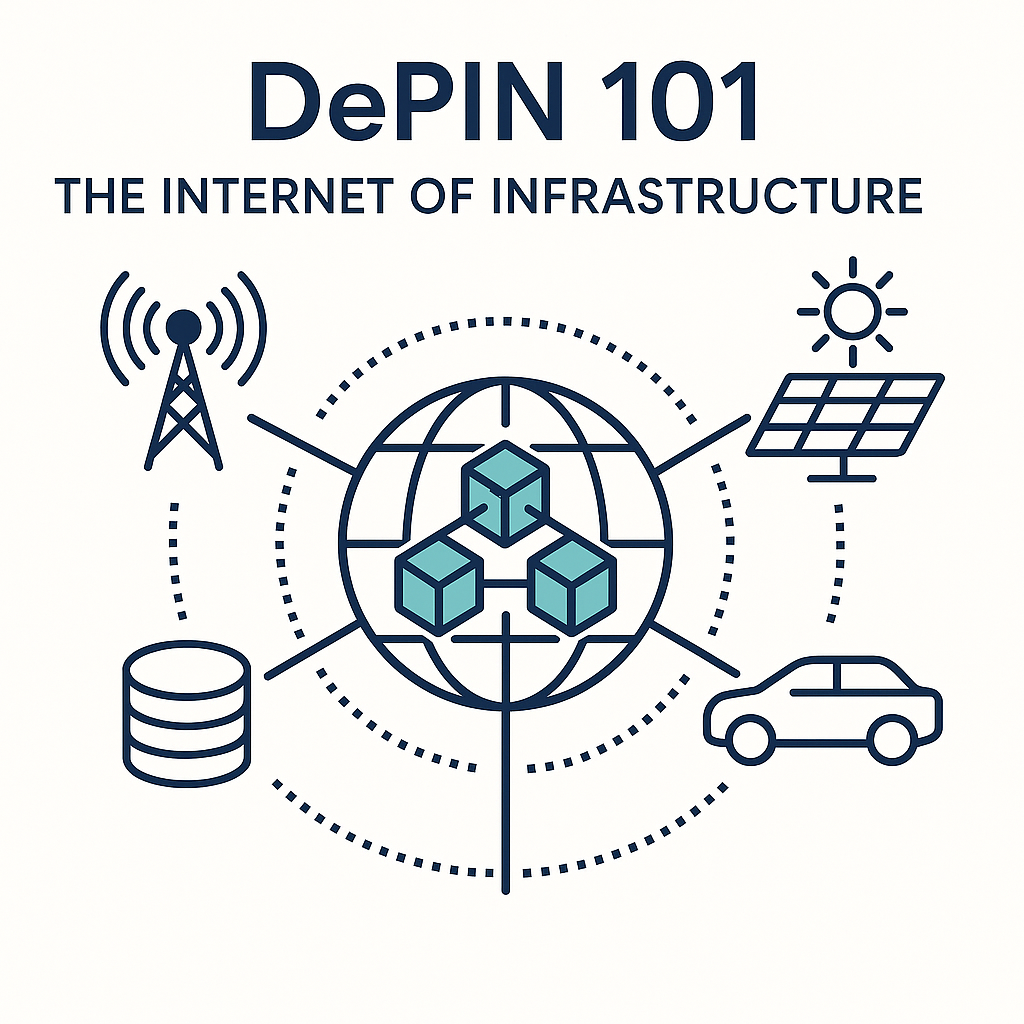
Decentralized Physical Infrastructure Networks (DePIN) are a new model for how physical systems—like wireless networks, energy grids, and mobility platforms—can be built and maintained. Instead of being owned by a single corporation, they’re developed and operated by distributed communities that contribute real-world resources (like bandwidth, sensors, or storage) and earn tokens or rewards for doing so. DePIN turns infrastructure into a shared, incentivized, and self-sustaining ecosystem.
Why This Matters
Most of today’s infrastructure—from cloud servers to logistics networks—is centralized. It relies on large entities that build and control access, often leading to high costs, limited innovation, and uneven global reach. DePIN changes this model.
By blending blockchain-based coordination with physical assets, DePIN makes it possible for anyone to contribute to and benefit from infrastructure creation. A teacher in Nairobi could earn by hosting a wireless node. A parent in Chicago might power a solar microgrid tied to a DePIN energy network. The outcome is a more resilient and inclusive architecture for the next internet era—an “Internet of Infrastructure” that scales through participation, not ownership concentration.
Here’s How We Think Through This
1. Identify the Core Function.
Every DePIN project starts with a real-world function—connectivity, compute, logistics, power. The goal is to decentralize how that function is delivered, not just tokenize it.
2. Define Contribution Mechanisms.
Participants supply physical assets (routers, sensors, vehicles, batteries) or digital capacity (storage, compute cycles). Their contributions are verified through on-chain protocols that track reliability and performance.
3. Incentivize Participation with Tokens.
The network rewards verifiable contributions with digital tokens or credits, aligning local incentives with global infrastructure goals. This creates a transparent economy for infrastructure participation.
4. Ensure Governance and Stability.
Over time, DePIN projects evolve toward community governance—where contributors help decide rules, pricing, and future expansion. This step ensures the system remains adaptive and fair, not just technically decentralized.
5. Integrate with Legacy Systems.
DePIN isn’t about replacing everything. Successful networks blend with existing infrastructure—enhancing reliability, improving access, and lowering operational costs for traditional systems.
What Is Often Seen as a Future Trend
Many treat DePIN as a speculative frontier of “Web3 meets hardware.” But in practice, it’s already taking root. Helium’s decentralized wireless network operates in thousands of cities. Render Network distributes GPU rendering globally. Energy Web is coordinating decentralized power resources for grid balance.
The insight is this: DePIN represents not just a technology trend, but a shift in how we organize trust and value around the physical world. For educators and parents, this means helping future generations understand that infrastructure won’t just be something governments or corporations provide—it will be something communities build together.