Quick Insight
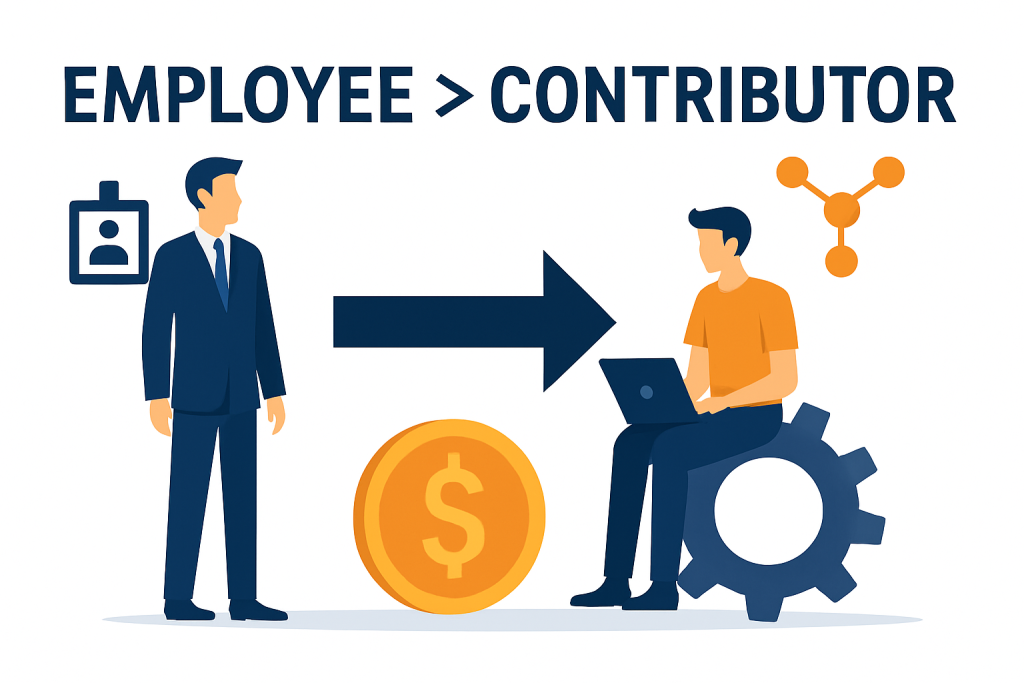
DAO-native ecosystems are reshaping how people engage with work. Instead of formal employment roles defined by job titles and contracts, DAOs rely on flexible, contribution-based participation. Individuals earn ownership stakes through the value they add—whether that comes from coding, community engagement, design, operations, or governance. This shift turns “employees” into “contributors,” aligning incentives with outcomes rather than hierarchy.
Why This Matters
For future-curious readers, parents, and educators
The next generation will likely encounter work that looks very different from the stable, linear career paths familiar today. DAOs introduce a world where:
- Skills matter more than job titles
- Work is modular, flexible, and remote-first
- Compensation is tied to contribution, not tenure
- Ownership is shared, not centralized
For young people, this offers new ways to participate in global projects, build a reputation, and earn value without navigating traditional hiring processes. For educators, it signals a future where portfolios, contribution histories, and community participation may carry as much weight as diplomas.
Here’s How We Think Through This
Step-by-step, grounded in organizational mechanics
1. Redefine identity: from role-based to contribution-based
In DAOs, individuals rarely carry static titles. Identity is fluid and task-driven.
This means someone may be a researcher in one project, a strategist in another, and a moderator in a third—all within the same week.
Implication: Identity is tied to demonstrated value, not assigned roles.
2. Unpack incentives: tokens replace traditional compensation
Instead of wages or salaries, contributors may earn governance tokens, project tokens, or reputation points.
These represent:
- Ownership
- Voice in decision-making
- A stake in the long-term success of the ecosystem
Implication: Incentives become multidimensional—income + ownership + influence.
3. Understand the task market: a new model of work coordination
DAOs run on open task markets where work is posted publicly, and contributors self-select.
Tasks may be micro (e.g., proofreading) or macro (e.g., designing governance frameworks).
Implication: Work becomes modular, transparent, and permissionless.
4. Explore how contributors build reputation
In a DAO, reputation is built through visible contributions:
- Completed tasks
- Community engagement
- Governance participation
- Expertise demonstrated in public
Reputation can unlock higher-value tasks, leadership roles, or delegation rights.
Implication: Reputation becomes a portable asset across ecosystems.
5. Examine ownership distribution
Because tokens represent ownership, contributors directly shape the future they’re helping build.
DAOs reward value creation, not just initial financial investment.
Implication: Ownership shifts from capital holders to active contributors.
6. Consider operational design: how DAOs coordinate talent
DAOs rely on:
- Treasury management protocols
- Smart contracts to automate rewards
- Contribution tracking systems
- Delegation frameworks
- Community-driven prioritization
Implication: Coordination replaces management; transparency replaces supervision.
What Is Often Seen as a Future Trend—Real-World Insight
DAO-native work is often portrayed as a frictionless future of freedom and flexibility. In reality, it works best in contexts where:
- Contributors are globally distributed
- Work can be modular and asynchronous
- Decision-making benefits from transparency
- Community-driven value creation matters more than speed
- Ownership alignment strengthens outcomes
Challenges remain—unclear legal structures, inconsistent compensation, contributor burnout, and the need for strong cultural norms. But as DAOs mature, they offer a preview of a workforce model that may increasingly complement or coexist with traditional employment.
The practical takeaway: DAOs reveal an emerging world where work is fluid, ownership is earned, and contribution—not hierarchy—defines influence.