
Quick Insight
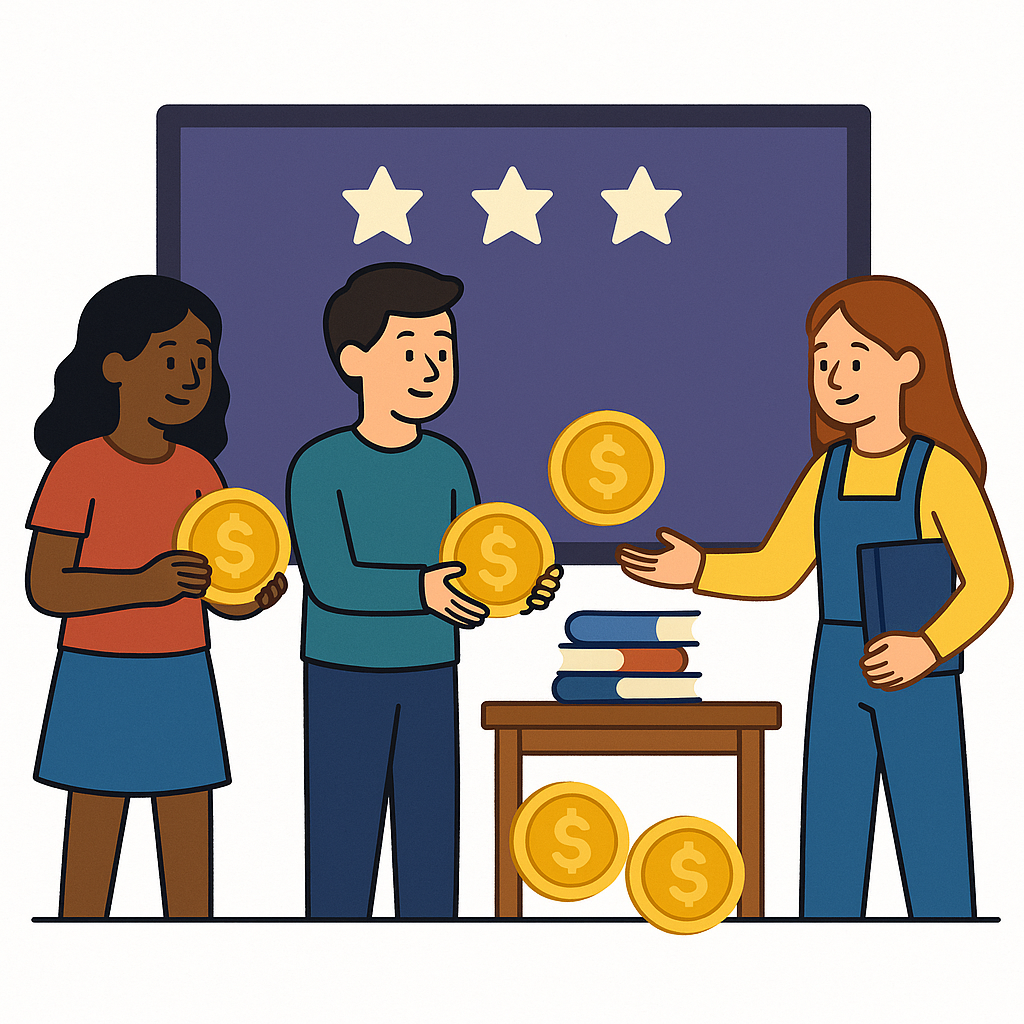
Imagine a classroom that functions more like a thriving mini-economy than a top-down learning environment. In this emerging model, students use tokens to create, exchange, and manage value among themselves—rewarding collaboration, initiative, and contribution.
Rather than a teacher distributing points, tokenized systems enable learners to build peer-to-peer economies—where effort, support, and creativity become currencies of shared value. This isn’t just gamification; it’s a redefinition of how learning communities organize and sustain themselves.
Why This Matters
Traditional classroom systems centralize control: teachers assign value, students earn it. Token economies invert that structure. When students can issue, trade, and manage tokens among themselves, they begin to understand economics, governance, and accountability through lived experience.
Here’s why it matters now:
- Agency replaces compliance. Students become active participants in shaping their own learning economies.
- Collaboration gains structure. Peer recognition and fair exchanges reinforce cooperation and trust.
- Financial and civic literacy grow together. Token-based systems make concepts like budgeting, fairness, and governance tangible.
For parents and educators, this model builds real-world competencies in ethics, systems thinking, and shared responsibility—skills essential for navigating decentralized future economies.
Here’s How We Think Through This
Step 1: Define the Purpose of the Economy
Start by identifying what the token system should reward—creativity, teamwork, mentorship, or initiative. The tokens should reflect the classroom’s shared values, not just individual achievement.
Step 2: Co-Design with Students
Involve students in setting the rules for how tokens are earned, spent, and traded. This builds ownership and introduces governance as a practical, collaborative process.
Step 3: Keep Transparency Central
A simple ledger—digital or analog—lets everyone track token flows. Visibility teaches accountability and trust, mirroring real-world economic systems.
Step 4: Reinforce Learning Through Exchange
Allow tokens to be exchanged for classroom privileges, learning tools, or peer recognition. The act of exchange helps students grasp the concept of value creation and mutual benefit.
Step 5: Reflect and Iterate
End each cycle by reviewing what worked and what didn’t. This meta-level reflection is where students learn about systems design, fairness, and adaptability—core skills for the future economy.
What Is Often Seen as a “Future Trend” — Real-World Insight
While it sounds futuristic, student-led token economies are already emerging in schools and educational innovation programs worldwide.
- Project-based learning environments now use digital tokens to track peer contributions, rewarding collaboration and mentorship.
- Blockchain-backed education pilots are experimenting with tokenized governance—students voting on project priorities or community initiatives using earned tokens.
- Classroom economies built around digital or paper-based tokens are teaching budgeting, trade, and negotiation in age-appropriate, experiential ways.
What’s being tested today will likely become the standard for collaborative learning ecosystems within a decade. These systems teach young people that leadership, trust, and accountability aren’t taught by lecture—they’re practiced through participation.
The future classroom won’t just simulate an economy; it will be one—ethical, transparent, and student-driven.