
Quick Insight
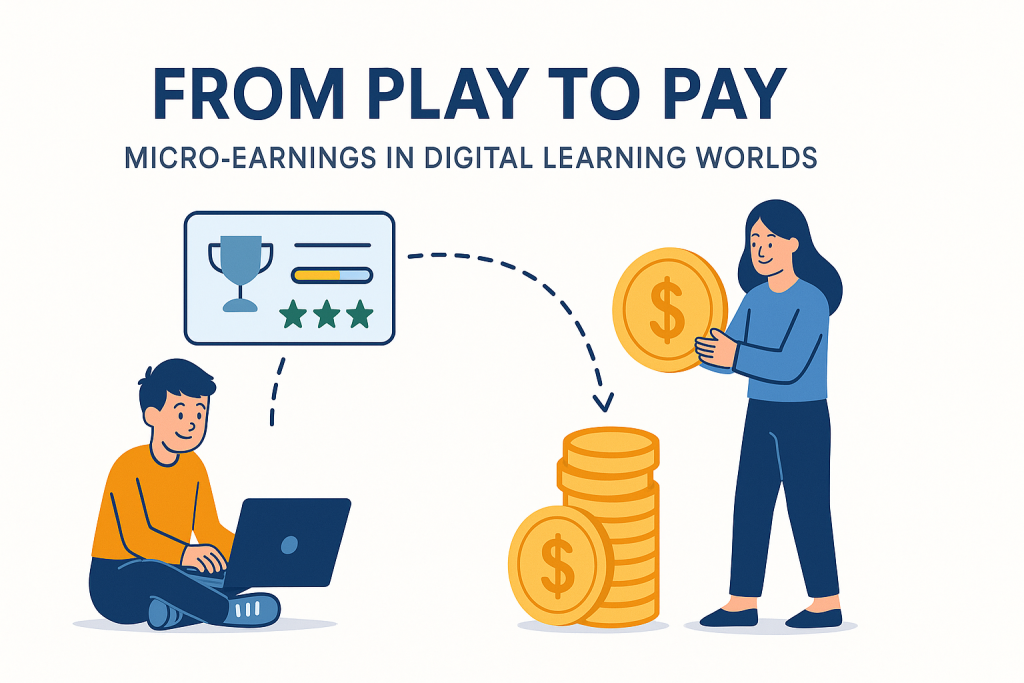
Game-based learning is evolving beyond badges and leaderboards. A new layer is emerging—micro-earnings: small, real-world token rewards for completing learning tasks, mastering skills, or contributing to virtual learning communities. Platforms blending education with blockchain-based incentives are beginning to transform play into an entry point for digital value creation. What once was “time spent playing” is becoming “time spent earning,” and this shift could reshape how young people understand work, motivation, and value in the digital age.
Why This Matters
The next generation isn’t just learning differently—they’re earning differently.
As education merges with digital economies, the boundary between learning, play, and labor blurs. When learners earn digital tokens or credits for completing STEM puzzles, contributing ideas, or designing within a learning game, they gain more than rewards—they gain an early sense of economic participation.
For parents and educators, this introduces both promise and complexity:
- Promise: Engagement increases, real-world skills are validated, and early exposure to digital economies becomes experiential learning.
- Complexity: The ethical, developmental, and regulatory implications of children “earning” online must be navigated with care—especially around value systems, privacy, and financial literacy.
Here’s How We Think Through This
Step 1: Start from Learning Outcomes, Not Tokens
The earning mechanism should reinforce genuine learning—not gamify attention. Platforms must link rewards to meaningful cognitive or creative achievements (problem-solving, collaboration, design-thinking).
Step 2: Map the Value Loop
Ask: Who funds the rewards? Where does value enter and exit the system? Sustainable models often tie tokens to educational partners, sponsors, or verifiable contributions—avoiding speculative economies.
Step 3: Frame “Micro-Earnings” as “Micro-Recognition”
Shifting language from “earning” to “recognition” helps maintain educational integrity. Learners aren’t employees; they’re contributors in an ecosystem where growth is celebrated tangibly.
Step 4: Teach Financial & Digital Citizenship Early
Any platform introducing real-value rewards should embed modules on ethics, safety, and digital finance literacy. The goal: learners understand what value means, not just how to collect it.
Step 5: Prototype and Pilot
Future-ready institutions test small. A pilot program where students earn verified digital credentials or micro-scholarships for creative contributions can demonstrate both the motivational power and the policy gaps before scaling.
What Is Often Seen as a “Future Trend” — Real-World Insight
While many see tokenized learning rewards as futuristic, it’s already happening:
- Educational games like “Learn & Earn” ecosystems are using blockchain-based tokens for completing tasks tied to real courses.
- Platforms like Roblox Education and Minecraft for Learning are exploring creator economies where student-built assets hold real value.
- Credential-linked micro-rewards are being tested in workforce development programs, connecting learning milestones with employable skill badges or financial stipends.
The next five years will likely see the normalization of “micro-income pathways” within educational platforms—especially for underserved learners who may first access digital economies through learning games rather than jobs.
This is less about “kids making money from games” and more about building fluency in value creation, contribution, and digital self-efficacy—core skills for any future economy.