
Quick Insight
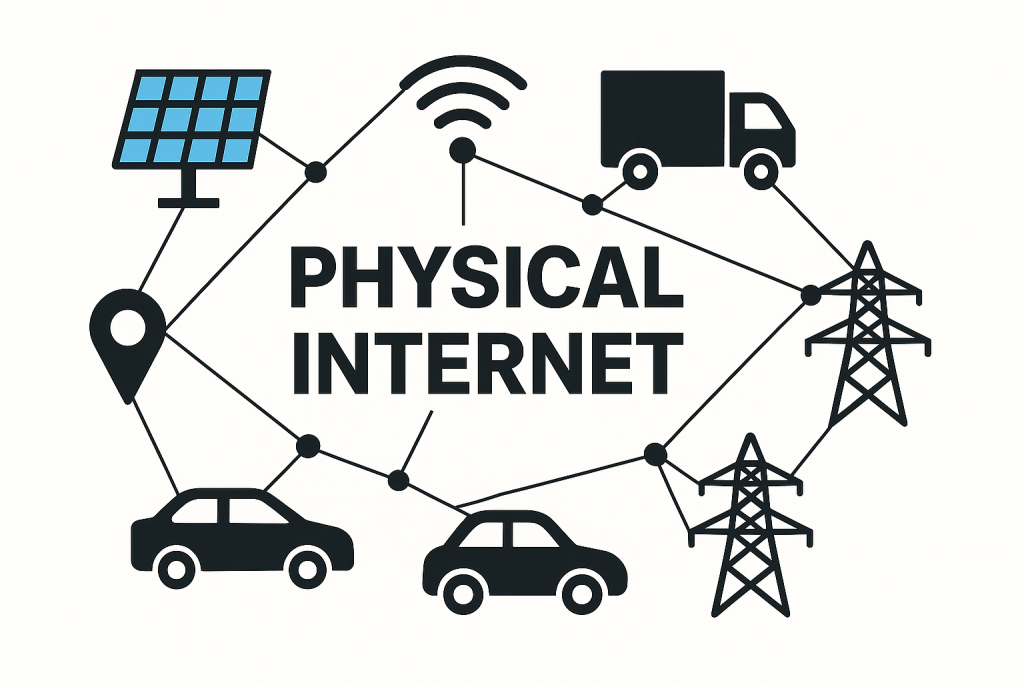
The internet connected information. DePIN—Decentralized Physical Infrastructure Networks—aims to connect everything else. From energy grids and mobility systems to logistics networks and local sensors, DePIN extends the coordination principles of the digital internet into the physical world.
Where the internet used data packets to link servers and users, DePIN uses cryptographic coordination and tokenized incentives to link physical assets and contributors. The result is what many are calling the Physical Internet: an open, decentralized network for the movement of energy, goods, and services—built not by corporations, but by communities.
Why This Matters
Modern infrastructure systems are essential yet fragile. They rely on centralized control—large operators managing complex logistics, power distribution, and mobility networks. While efficient at scale, this model can be inflexible, expensive, and slow to adapt to local needs.
DePIN introduces a fundamentally different architecture. It allows distributed networks of individuals, devices, and organizations to coordinate physical activity using blockchain technology. Each node—whether it’s a solar panel, delivery vehicle, or router—communicates, verifies, and earns for contributing capacity or data to the shared system.
In practical terms, it means:
- Logistics networks where drivers and storage hubs dynamically coordinate without intermediaries.
- Mobility systems where vehicles act as independent service nodes.
- Energy grids that balance themselves through local supply and demand.
For educators and parents, this shift reflects the next stage of digital literacy—understanding how decentralized coordination can reshape not only online ecosystems but the physical systems we depend on daily.
Here’s How We Think Through This
1. Identify the Physical Layers Ready for Coordination.
DePIN begins where real-world systems can benefit from shared access and decentralized operation. This includes energy (solar, batteries), connectivity (Wi-Fi, cellular), logistics (transport, warehousing), and environmental sensing.
2. Build a Verifiable Participation Layer.
Blockchain serves as the coordination protocol—verifying contributions (like energy shared, miles driven, or bandwidth provided) and issuing digital tokens or credits in return. This creates trust without requiring centralized oversight.
3. Align Incentives with Real-World Utility.
The key to DePIN’s success is ensuring that tokens represent useful work. Participants earn rewards not for speculation but for measurable contributions—verified through cryptographic proofs and network metrics.
4. Foster Interoperability Across Systems.
Just as the internet unified data exchange, the Physical Internet depends on interoperability. DePIN networks must connect across energy, logistics, and mobility ecosystems to form larger value chains.
5. Design for Community Resilience.
The future of infrastructure isn’t corporate—it’s cooperative. Community-owned nodes create redundancy, transparency, and adaptability that traditional infrastructure often lacks.
What Is Often Seen as a Future Trend
The concept of a Physical Internet once sounded abstract, but it’s already taking shape. Projects like Helium (decentralized wireless), Filecoin (decentralized storage), and DIMO (vehicle data networks) demonstrate how distributed assets can coordinate to deliver reliable, scalable infrastructure services.
Logistics startups are exploring DePIN models to manage shared fleets and route optimization. Renewable energy collectives are using blockchain to distribute locally produced power. In each case, infrastructure becomes programmable, just as the internet made information programmable three decades ago.
The deeper insight: DePIN represents the convergence of digital trust and physical systems. It allows society to move from centralized command to collective coordination. For the next generation, this is the architecture of the real-world internet—a network not just of data, but of shared participation in how the world actually runs.