
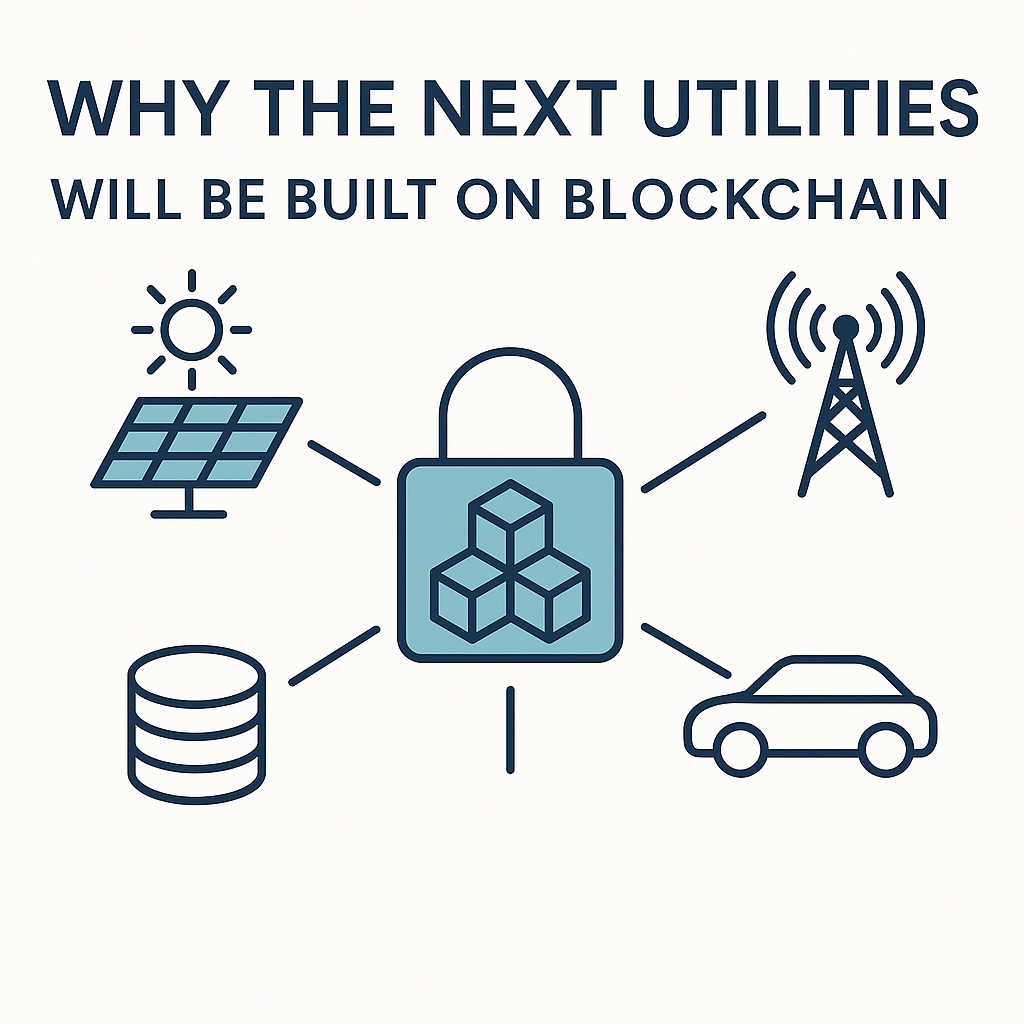
Quick Insight
The next generation of public utilities—power, communications, water, and mobility—will not be owned by corporations or governments alone. They will be built as decentralized, blockchain-enabled networks. These networks, often called DePINs (Decentralized Physical Infrastructure Networks), combine physical systems like solar panels, routers, and vehicles with blockchain coordination and incentives. The result is a new utility model: transparent, participatory, and self-sustaining—where users aren’t just consumers but contributors.
Why This Matters
Traditional utilities rely on centralized control. Whether you’re accessing electricity, internet bandwidth, or transportation data, the structure is typically hierarchical—one operator, many dependents. While this model offers stability, it also creates bottlenecks, inefficiencies, and inequities in access.
Blockchain-enabled DePIN models invert this logic. They allow individuals and small operators to contribute resources (like compute power, network nodes, or renewable energy) directly into a shared grid. Smart contracts record and verify contributions, while tokens or credits reward participation. This transforms the economics of infrastructure from ownership and billing to participation and value-sharing.
For educators, parents, and community leaders, this shift represents more than just new technology—it’s a civic and social transformation. The ability to build and maintain infrastructure through collective ownership opens new ways to teach resource management, sustainability, and collaboration in a digitally connected world.
Here’s How We Think Through This
1. Start with the Problem the Network Solves.
Every successful decentralized utility begins with a clear public need—reliable energy, affordable connectivity, accessible transport data. Blockchain isn’t the purpose; it’s the coordination layer that enables trust and participation at scale.
2. Map the Physical Contributions.
DePIN networks depend on real-world inputs. For energy, it’s solar panels and batteries. For mobility, it’s GPS data or vehicle capacity. For communications, it’s routers and signal coverage. Each contribution becomes a “node” in a distributed physical system.
3. Build Incentives and Verification.
Smart contracts and tokens ensure participants are rewarded fairly for their verified contributions. This eliminates the need for central intermediaries and allows the system to scale globally through aligned incentives rather than corporate budgets.
4. Design for Transparency and Resilience.
Blockchain ledgers provide a public record of performance, cost, and impact. When infrastructure data is open, networks become more trustworthy and resilient—able to adapt without depending on a single authority.
5. Align with Policy and Community Goals.
Decentralized doesn’t mean unregulated. The most successful DePIN projects complement local goals—such as clean energy mandates, rural broadband, or urban transport optimization. The future of utilities will be co-governed by policy frameworks and community participation.
What Is Often Seen as a Future Trend
Blockchain utilities are frequently described as experimental or “next decade” concepts. Yet they’re already operational. Helium’s wireless network rewards individuals for providing connectivity. Energy Web’s decentralized grid platform coordinates renewable assets across continents. DIMO enables vehicle owners to share mobility data and earn tokens in return.
The deeper insight is this: the next utilities are not just digital—they are participatory. Blockchain provides the trust layer that lets thousands of contributors act like one coherent system. Instead of waiting for infrastructure to be built for them, communities can build it themselves—with technology that makes contribution visible, rewarded, and accountable.
This is not just the future of technology; it’s the future of public infrastructure itself.