
Quick Insight
For centuries, real estate investment has been defined by geography. To buy or sell property across borders, investors faced layers of legal, financial, and logistical complexity. Blockchain is rewriting that playbook. Through tokenization—the process of representing property ownership as digital tokens—investors can participate in real estate markets anywhere in the world, seamlessly and transparently.
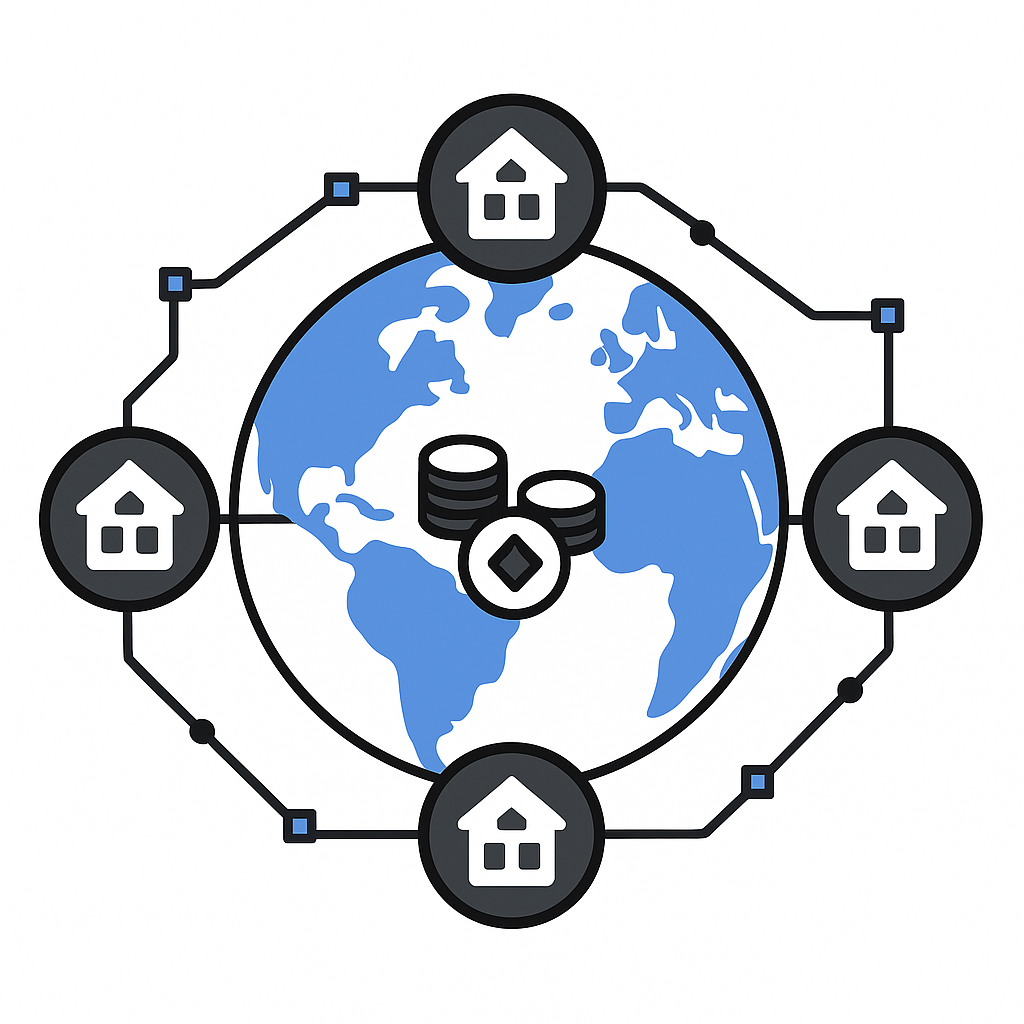
Tokenized real estate transforms physical assets into globally tradeable digital units, eliminating friction across currencies, jurisdictions, and intermediaries. What was once a highly localized market is becoming a global, digital ecosystem.
Why This Matters
In an interconnected economy, wealth creation shouldn’t stop at national borders. Yet traditional property markets remain constrained by regulation, currency risk, and administrative overhead. Tokenization unlocks a new paradigm of borderless investment—allowing an investor in Nairobi, Toronto, or Singapore to own fractional shares in a property portfolio spanning continents.
For parents, educators, and young investors, this shift isn’t just financial—it’s cultural. It redefines what it means to “own” something in the digital economy. Real estate becomes a liquid, data-driven asset class, accessible through secure blockchain platforms and governed by smart contracts that automate trust.
The result: participation that is broader, faster, and more inclusive.
Here’s How We Think Through This
- Map the Traditional Frictions
Cross-border real estate deals historically require banks, brokers, lawyers, and lengthy verification chains. Currency conversion, taxation, and title validation slow the process and inflate costs. - Understand Tokenization as Infrastructure
Blockchain-based property tokens represent fractional ownership in a verified asset. These tokens can be bought and sold globally, with transactions recorded immutably on distributed ledgers. The system operates 24/7, allowing liquidity in a historically illiquid market. - Consider Compliance and Regulation
Tokenized real estate must comply with local property laws and international financial standards. Platforms use built-in compliance features—like KYC (Know Your Customer) and AML (Anti-Money Laundering) protocols—to ensure legality while maintaining accessibility. - Evaluate Currency and Settlement Advantages
Smart contracts handle payments instantly in stable digital currencies (like USDC), avoiding delays and fees associated with international banking. Exchange rates, settlement times, and custodial risk are minimized, making real estate behave more like digital equities. - Forecast the Global Effects
The internationalization of real estate markets could balance global investment flows, reduce entry barriers for smaller investors, and open opportunities for underdeveloped regions to attract direct digital capital. It’s not just about property—it’s about financial inclusion at scale.
What Is Often Seen as a Future Trend — Real-World Insight
Tokenized property markets are already transcending borders:
- RealT enables investors from over 150 countries to purchase fractional shares of U.S. rental properties.
- Brickken in Europe and CitaDAO in Asia-Pacific are building regulatory-compliant frameworks for global real estate token offerings.
- Dubai and Switzerland are emerging as regulatory hubs for property tokenization, creating clarity for both local and international investors.
These examples signal a future where global citizens can diversify property portfolios as easily as stock traders diversify equities today. The implications reach beyond finance—education, citizenship, and digital literacy will all play roles in preparing people to participate in this new economy.
The borderless property market isn’t a distant vision—it’s an evolving ecosystem. And as regulations align with technology, the phrase “location, location, location” will take on an entirely new meaning.