
Quick Insight
Real estate has long been a cornerstone of wealth creation—but also one of the least accessible asset classes. High entry costs, complex regulations, and geographic barriers have kept most people, especially younger investors, on the outside looking in.
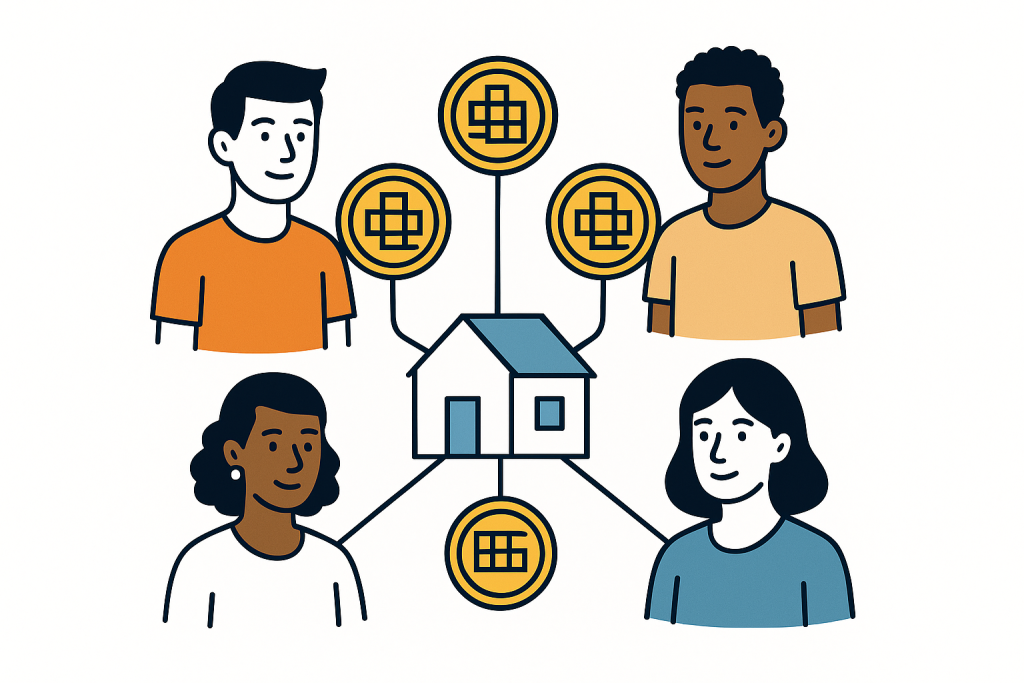
Blockchain-based tokenization is changing that. By converting real property into digital tokens representing fractional ownership, it opens the door for global participation. Investors can now buy, sell, and trade property shares as easily as digital stocks, redefining how wealth is built and distributed.
Why This Matters
The ability to participate in property ownership has historically been limited by financial means, credit access, and proximity. Tokenization removes those constraints by breaking large assets into smaller, verifiable digital units.
For families and educators, this shift signals a transformation in financial inclusion. Imagine a young professional in Nairobi owning fractional shares of a co-living development in Toronto—or a student learning investment principles by managing a digital property portfolio with friends.
At its core, tokenization is not about speculation—it’s about participation. It gives more people a stake in real-world assets, fostering financial literacy, digital citizenship, and long-term stability.
Here’s How We Think Through This
- Understand What Tokenization Really Does
Tokenization isn’t about turning real estate into cryptocurrency. It’s about representing verified, legally backed ownership stakes as digital tokens on a blockchain. Each token corresponds to a fraction of a physical property, verified and traceable. - Evaluate the Trust Mechanism: Blockchain as the Backbone
Blockchains provide an immutable ledger, ensuring every transaction—buying, selling, or trading property tokens—is recorded transparently. This drastically reduces fraud risk and dependency on opaque intermediaries. - Examine Accessibility and Market Impact
Traditional real estate investment trusts (REITs) offered some accessibility, but tokenization goes further by allowing fractional ownership down to very small units. This creates more liquid and flexible markets, where investors can diversify across cities and property types. - Align with Regulation and Compliance
Each jurisdiction defines how digital securities must comply with local property and investment laws. Emerging frameworks—like the European Union’s MiCA regulation and the U.S. SEC’s digital asset guidelines—are making tokenized property legally viable for retail and institutional investors alike. - Model Long-Term Shifts in Wealth Creation
As these systems mature, wealth will no longer be concentrated among those who can buy full properties or fund large projects. Instead, distributed ownership models will allow micro-investors to grow capital collectively—building not just portfolios, but participation.
What Is Often Seen as a Future Trend — Real-World Insight
This isn’t just theory—it’s already happening:
- RealT and Lofty AI are enabling small investors to purchase fractions of U.S. rental properties, earning proportional rental income.
- Smartlands in the U.K. has tokenized portions of commercial real estate for accredited investors, expanding liquidity in traditionally illiquid markets.
- Dubai’s Land Department has piloted blockchain-backed title registration, showing how tokenized systems can coexist with formal property law.
These examples show that the democratization of property ownership is more than a trend—it’s a new infrastructure for inclusion. As digital literacy rises, tokenized assets could become the first property experience for the next generation of investors.
For educators, the takeaway is clear: teaching property, finance, and digital trust systems will be essential life skills. For families, it represents a pathway toward shared generational wealth creation—no longer gated by geography or capital.