
Quick Insight
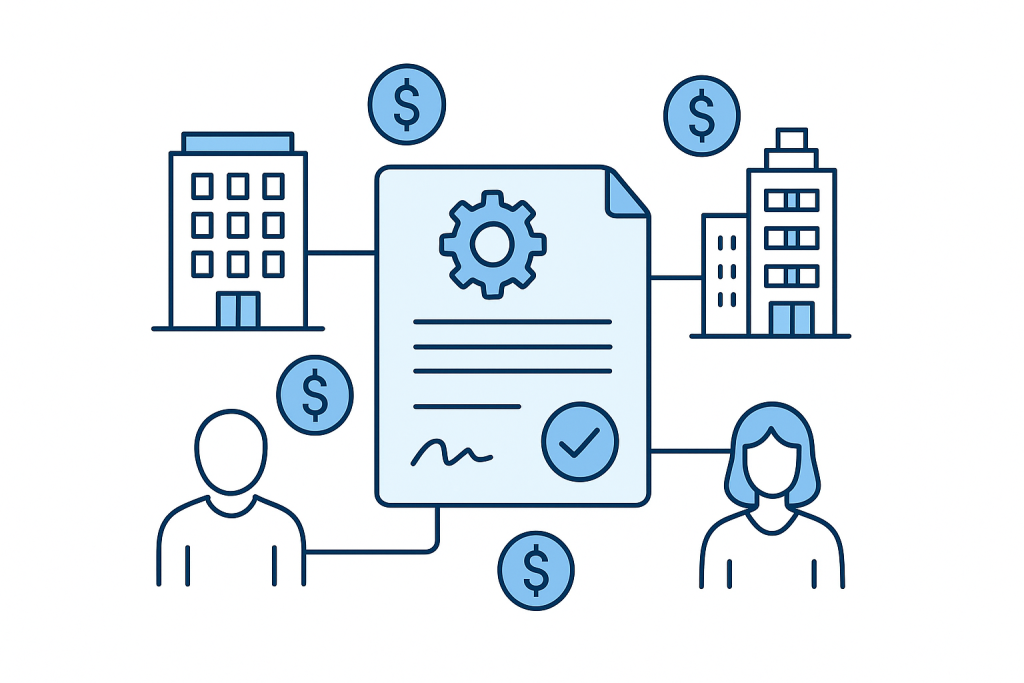
Real estate has long depended on paperwork, intermediaries, and weeks of verification. Smart contracts are changing that. These blockchain-based digital agreements automatically execute transactions when predefined conditions are met—no middle agents, no manual bottlenecks, and no ambiguity.
From ownership transfer to rental payments, smart contracts create a layer of programmable trust—turning static real estate deals into dynamic, self-executing systems that are faster, more transparent, and more secure.
Why This Matters
For families, educators, and future-focused investors, understanding this shift is about more than technology—it’s about trust transformation. Traditional real estate relies heavily on notaries, lawyers, and escrow agents to verify and manage contracts. Smart contracts compress these steps into code, ensuring agreements execute only when all conditions are met.
This isn’t just efficiency—it’s accessibility. It allows smaller investors, global participants, and even community developers to transact securely without being locked out by geographic or bureaucratic barriers. In a world where real estate remains one of the largest and least liquid asset classes, this automation opens new opportunities for speed, inclusion, and innovation.
Here’s How We Think Through This
- Identify the Friction Points in Traditional Systems
Every property deal involves repetitive trust checks—title verification, funds transfer, and contract validation. These steps depend on human intermediaries and can take weeks. Smart contracts replace these with verifiable code that executes instantly when all terms are satisfied. - Understand the Role of Blockchain as the Execution Layer
Smart contracts operate on blockchains, ensuring that every transaction is transparent and immutable. Ownership transfers, compliance checks, and payment releases are all logged permanently, creating a tamper-proof record of activity. - Design with Legal and Regulatory Alignment in Mind
While the technology is borderless, real estate remains jurisdiction-based. The key is designing smart contracts that comply with local property laws and financial regulations. Many emerging platforms now embed these legal frameworks directly into code or connect with regulatory APIs. - Evaluate Operational Impact
- Speed: Transactions can settle in hours instead of weeks.
- Cost: Reduced legal and processing fees.
- Trust: Code enforces terms objectively, reducing disputes.
- Transparency: Every participant can verify contract execution in real time.
- Plan for Hybrid Adoption
The near future won’t eliminate traditional players but will integrate them. Real estate lawyers and brokers will shift from process management to system governance, ensuring smart contracts meet compliance standards and community trust.
What Is Often Seen as a Future Trend — Real-World Insight
The shift to smart-contract-driven real estate is already underway:
- Propy has facilitated blockchain-based real estate transactions in the U.S. and Europe, reducing closing times dramatically.
- CitaDAO and RealT are experimenting with property ownership and rental income distribution through tokenized smart contracts.
- Governments in Dubai and Sweden have piloted blockchain-based property registries to secure land titles and simplify transfer processes.
These pilots show that automation doesn’t remove trust—it redefines it. The smart contract becomes a digital trustee, executing what we used to delegate to paper and people. As this model scales, real estate will shift from being slow-moving and opaque to fast, fluid, and data-verified.
For parents and educators, this evolution highlights a key skill set for the next generation: understanding how digital trust systems replace traditional gatekeepers. Tomorrow’s real estate agents, developers, and investors will need fluency in both property law and programmable logic.